HSK Ward Group


At a Glance — Key Results
68,000 m² Warehousing and manufacturing campus secured across six warehouses and production facilities
117 Verkada devices (cameras, access control, and alarms) managed through a single cloud platform
$125,000 annual savings by streamlining our previous security control measures.
Faster investigations – from hours of manual scrubbing to minutes using motion- and attribute-based search
Stronger insurance risk profile following a comprehensive security uplift
Nourishing Communities, Protecting a Trusted Australian Brand
HSK Ward Group is an Australian-owned, sixth-generation business committed to sourcing quality ingredients, nurturing long-term partnerships, and using technology to keep its operations running smoothly.
Under the McKenzie’s brand, the company supplies pantry staples to supermarket shelves and foodservice businesses, along with industrial products ranging from retail packs to 1,000 kg bulk bags. Through FTA Food Solutions, HSK Ward also imports and distributes specialty food products across Australia, New Zealand, and international markets.
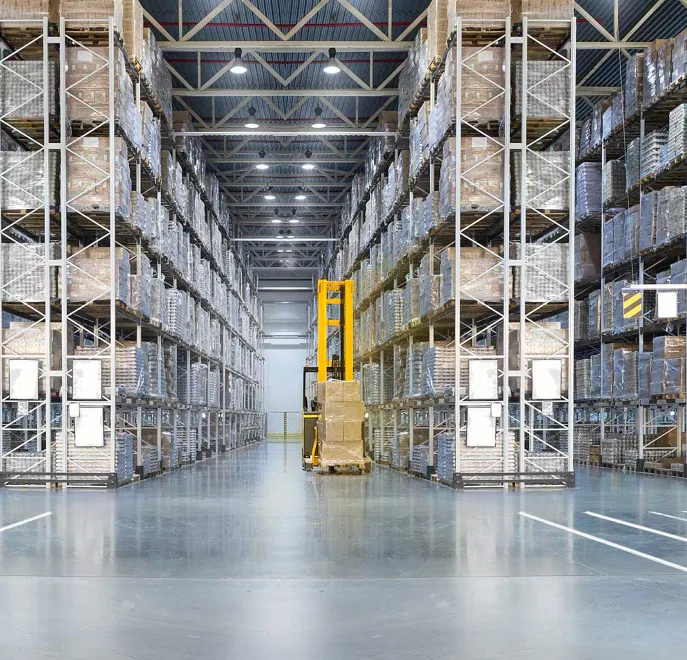
These operations come together at a 68,000 m² manufacturing hub in Melbourne, spanning six buildings across two streets.
“We’ve got a lot of buildings to look after and a lot of ground to cover from a security point of view,” says Manufacturing Manager Michael Farrelly.
The Challenge: Ageing DVRs and Reactive Security
When Michael joined, HSK Ward’s CCTV system was outdated and increasingly unreliable:
A “very clunky” DVR/NVR setup with tapes and recorders
Limited ability to search or filter footage
A reactive approach where incidents were discovered too late
PIN-based access requiring frequent code resets at an additional cost
A large, dispersed site with multiple entry points
“One example was coming in on a Monday and discovering a hole cut in the fence,” Michael recalls. “You’d then be reviewing hours of footage to work out when it happened and what was affected.”
The business had relied on an on-site guard for weekend patrols, but with rising costs and a widespread campus, that model could no longer stand on its own. Insurers and regulators were also recommending stronger, more consistent controls — reinforcing the need to standardise security.
“We had assessments where the recommendation was clear – we needed to upgrade security on site. That was before it started to affect our premiums, so there was a strong push to act.”
Why Verkada: A Unified Platform for a Complex Site
HSK Ward set out to consolidate fragmented systems and modernise without adding operational complexity.
Verkada stood out for several reasons:
Cameras, access control, and alarms unified in one platform
Cloud-based visibility from any device, including mobile
Strong alignment with food safety, compliance, and traceability requirements
Scalable protection across a large, multi-building campus
“When our IT lead was looking at solutions, he wanted one system that could handle as much as we threw at it,” Michael says. “We could have gone with separate systems — CCTV here, key cards there — but the fact that Verkada had it all combined was a massive business advantage.”\

Deployment: Securing a 68,000 m² Campus
The Melbourne site is now protected by 117 Verkada devices, including:
Indoor and outdoor cameras across warehouses, production areas, and perimeter locations
Access-controlled doors replacing old PIN pads
Integrated alarms with tiered workflows for after-hours activity
All buildings are already on Verkada, with the business making further changes in line with business needs and demands.
“Almost all access doors around the business are now on key cards,” Michael says. “Employees can move between warehouses easily, doors stay locked, and no one can just wander in off the street. It’s much safer for both people and product.”
Because he manages a sizeable operation spread across multiple buildings, Michael values having a system that stays straightforward to use. “I’m not very tech savvy, but I can very easily snip, save, and share clips. The system is intuitive, and it does what we need it to do.”
Strengthening Food and Site Security
For a food manufacturer, protecting product integrity is essential. With Verkada, HSK Ward now has:
Real-time alerts for after-hours movement
Escalating alarm workflows for building access events
Monitoring support, with operators able to verify footage and call Michael directly
“If someone is on site outside of hours, I get a text with a link to the video footage,” he says. “If they move inside a building, it escalates as an alarm.”
Verkada has supported incident reviews involving:
Fence tampering and unauthorised access
A stolen electric mountain bike
Gate damage caused by a departing truck
With the AI-powered unified timeline and natural language search for people and vehicles, reviews that once took hours now take minutes.


Supporting a Safety-First Culture
Michael emphasises that cameras are used to support safety — not to monitor productivity.
“Some businesses use cameras to ‘catch’ people not working. We don’t do that,” he says. “We use the system as an educational tool to support safer work.”
Footage helps teams:
Review incidents and understand what occurred
Reinforce safe work practices
Provide accurate context during formal reports
In one example, footage provided clear context during a forklift-related safety review.
“We could see what had happened and ensure the situation was reviewed accurately and resolved appropriately.”
This approach has strengthened a culture of learning, transparency, and accountability.
Warehouse Visibility and Driver Safety
With up to 60 trucks a day moving through the site, visibility is essential. Verkada now supports operations by:
Displaying live loading-bay views on wall-mounted screens
Helping staff prepare orders as trucks approach
Using licence plate recognition (LPR) to track vehicle movements
“We received a report about a driver’s on-site movements,” Michael says. “Using LPR and footage, we reviewed their recent visits and gathered the information we needed to speak with their company.”
Michael sees future opportunities to integrate LPR with automatic gate control. Doing so would allow authorised vehicles to enter automatically, reducing congestion at busy entry points and creating a clearer, more traceable record of vehicle movements across the site.

Remote Management from a Mobile Phone
Remote management has been one of the most impactful changes for Michael and his team. With the Verkada Command mobile app, he can review alerts, adjust alarms, and check live camera feeds without needing to be on site — or even near a computer.
“If someone comes in early on a Saturday and I get an alert at 6am, I can jump into the app, adjust the alarms, and go back to sleep,” he says. “With older systems, you’d be getting out of bed, firing up a laptop… now it’s two taps.”
What once required logging into a panel or driving to site can now be done on-the-spot from his phone. Michael can unlock doors for contractors, confirm alarm events with linked camera footage, and review activity from any building in minutes.
This shift has reduced unnecessary site visits, sped up after-hours responses, and made it far easier for staff and contractors to access the facilities safely when needed.

Result: Security, Savings, and Peace of Mind
Improved security and food protection: Real-time alerts and broader coverage reduce the chance of missing important activity.
Faster, clearer incident reviews: Investigations that once required hours can now be resolved in minutes using Verkada’s search tools.
Significant savings on guarding: Replacing weekend patrols with Verkada’s unified platform saves around $125,000 per year.
Compliance and insurance alignment: Modernised security supports insurer recommendations and helps protect inventory valued in the tens of millions.
Looking Ahead: Dust Monitoring and Smarter Automation
With the core platform in place, Michael is exploring further enhancements — starting with dust and air quality monitoring.
“We’re in a very dusty environment,” he says. “Depending on the results of our assessments, I’ll be looking at air quality sensors to monitor particulate levels. If we’re close to certain limits, I want alerts so we can act early.”
Future opportunities include:
Integrating LPR with automatic gates
Migrating the final warehouse to Verkada
Deepening use of AI-powered investigation tools and analytics
For now, the foundations are strong.
“From security to safety reviews, the system gives us the coverage and visibility we need across a big, busy site. It supports how we want to lead – out on the floor, with the cameras there when we need them.”