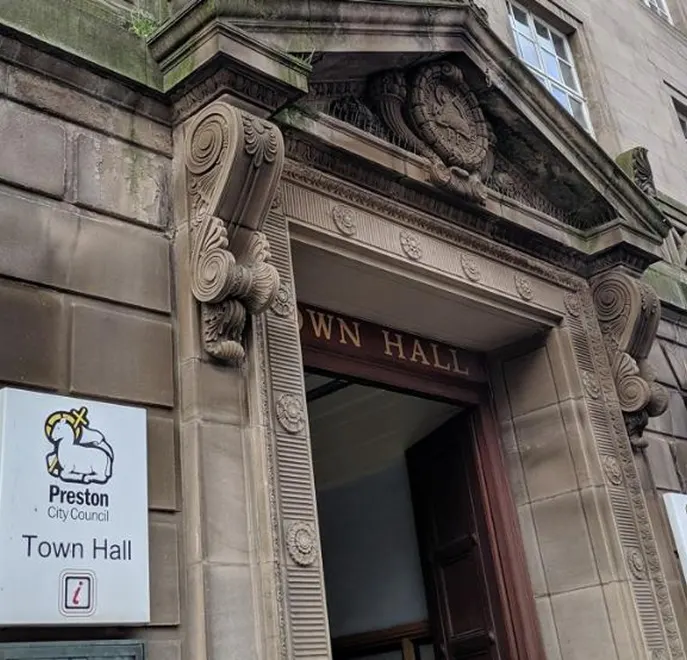
Preston City Council


Key Results
Reduced investigations to minutes, down from hours on the council’s previous platform
Eliminated onsite NVRs, removing friction when accessing and sharing footage
Centralised monitoring across council sites, including public spaces that welcome over 150,000 visitors per quarter
Improved public funding and lower insurance costs, supported by reliable video evidence
Long-term, future-ready security platform, backed by automatic updates, hardware warranties, and 10-year licensing
Background
Preston City Council serves a community of roughly 140,000 residents in Lancashire, England, operating a range of public-facing facilities — from museums and markets to shelters and council offices. Given the council’s frequent interaction with members of the public, safeguarding of both staff and members of the wider community is a critical responsibility.
While the council previously had a different security system, the platform became increasingly difficult to use over time. Investigations were slow and manual, and aging hardware required frequent replacement — driving up costs and limiting access to newer capabilities.
Andy Heywood, Head of Digital Services and Customer Contact, has spent nearly 20 years with Preston City Council, overseeing multiple generations of technology. When the council began renovating the Grade I-listed Harris Museum, the project became a catalyst to reassess its broader approach to security. Andy outlined clear requirements for a new system: faster investigations, dependable performance, and technology that could evolve without regular rip-and-replace cycles. These requirements ultimately led him to Verkada.
Partnering with Softcat
When Preston City Council began evaluating physical security providers, they turned to their long-standing partner, Softcat, for guidance. Andy had worked closely with Softcat for nearly a decade across a range of projects, giving him confidence in their ability to recommend solutions that aligned with the council’s specific needs. After assessing Preston’s requirements, Softcat recommended Verkada as a platform that would deliver long-term value.
From a procurement standpoint, Softcat also played a key role in supporting the council through the local government purchasing process. They helped map the council’s requirements to the most appropriate public sector procurement framework and provided clear commercial justification. This gave Preston City Council the documentation and confidence needed to demonstrate value for money. Overall, Softcat helped simplify the procurement process while ensuring full alignment with public sector standards.
Challenges
Preston City Council’s previous security system lacked a cohesive, long-term strategy. “It had all been done very ad hoc,” says Andy. “We relied on very specific people in the organisation with silos of knowledge. Anytime something happened and those people weren’t around, everything stopped working.”
The team was forced to manage disconnected tools, frequently replace components, and respond to incidents without a consistent or scalable approach.
When incidents did occur, investigations were time-consuming and restrictive. “I needed to be in the office to even access any footage,” recalls Andy. “Then, I had to sit there watching footage at full speed for hours before I found the thing I was looking for.”
Sharing videos added further friction, often requiring downloads to physical drives. From an IT standpoint, the system also introduced ongoing risk due to inconsistent firmware updates, with vulnerabilities regularly surfacing during annual health checks.
The solution
Andy evaluated several security solutions before selecting Verkada for its ease of use, scalability, and cloud-managed architecture. A hands-on trial allowed him to validate the platform firsthand and clearly demonstrate its value to internal stakeholders.
Today, Preston City Council uses Verkada’s unified platform to secure and monitor its facilities:
Cameras: A mix of fisheye, bullet, and mini dome cameras provides comprehensive coverage across key sites, including the Harris Museum, Night Shelter, and Market Hall — eliminating blind spots across council-owned premises.
Intercom: At the Market Office, Verkada Intercom enables staff to visually verify visitors before granting access, adding security without disrupting daily operations.
Air Quality Sensors: Installed in the Harris Museum to help meet Government Indemnity Scheme requirements, sensors continuously monitor temperature and humidity to protect loaned artwork. Additional sensors are also used in data centers and IT rooms to safeguard critical network infrastructure.
Analytics: Occupancy trends and heatmaps help teams understand how people move through busy areas, supporting crowd management and space planning.
Privacy & GDPR: Face Blur helps protect the privacy of anyone who appears in video footage with the ability to selectively unblur faces only when required for an incident.
Verkada Command: All devices are managed through a single, centralised platform, allowing staff to view and share footage from a desktop or mobile device.
Deployment was equally straightforward. The team self-installed many cameras, while complex areas — such as high ceilings and heritage architecture — were supported by Verkada partner Nebula. “That was absolutely brilliant,” says Andy. “They helped us get the trickier installs done properly.”
The benefits
Faster, more focused investigations
With Verkada, Andy and his team monitor all council sites from a single cloud-based dashboard. AI-powered search and Unified Timeline dramatically reduce investigation time, empowering teams to locate incidents in minutes — even when working remotely.
Proactive alerts further streamline response. Activity detection highlights events such as loitering or perimeter breaches. “Once, we received an alert for someone who climbed over a fence near the Guild Hall,” recalls Andy. “They just fell asleep for six hours. The next morning, they walked out to catch a train.” Even when incidents are harmless, alerts help ensure staff stay informed and proactive.
Simple footage sharing
Footage can be shared with just a click via SMS or email. A data-sharing agreement with Lancashire Police also allows temporary access to live camera feeds — revoked as soon as an investigation concludes: “This is not something we could have ever dreamed of on our previous system,” says Andy. “It reduces investigative legwork and makes working with law enforcement much easier.”
Lowered insurance costs
Reliable footage has helped the council reduce insurance exposure by supporting legitimate claims and protecting against fraudulent ones. Proactive alerts — such as slip-and-fall detection in high-traffic areas — also enable faster response and safer public spaces.
A long-term solution
Automatic firmware updates, hardware warranties of up to 10 years, and 10-year licenses mean the council only needs to invest once per decade. The result: no disruptive upgrades, no hidden costs, and a platform that continues to evolve.
Looking Ahead
Andy plans to expand Verkada across additional council-run sites and introduce new capabilities, including automatic number plate recognition (ANPR) to support investigations into road accidents.
The council is also exploring mobile deployments, such as equipping bin wagons with cameras connected via a Cellular Gateway, to verify collections and identify infrastructure issues like potholes. Additionally, cameras can help pinpoint areas prone to fly-tipping, allowing the council to monitor and respond more effectively in the future.
In 2026, Preston City Council plans to roll out Verkada Access Control, further strengthening secure access across facilities. Together, these initiatives support the council’s long-term goal: creating safer, more efficient environments for staff and the community they serve.