Woosong University


At a glance — outcomes
Centralized visibility across critical IT spaces in the server room, UPS room, and communications rooms within the IT operations center
Faster investigations with AI-powered search tools
Clearer accountability in sensitive areas with frequent third-party access
More accurate security reporting by verifying activity directly in Verkada, reducing reliance on memory
Fewer onsite trips by using live camera context to make operational decisions remotely
A scalable, unified platform that’s easy to expand over time as budgets allow
A global university, built to scale
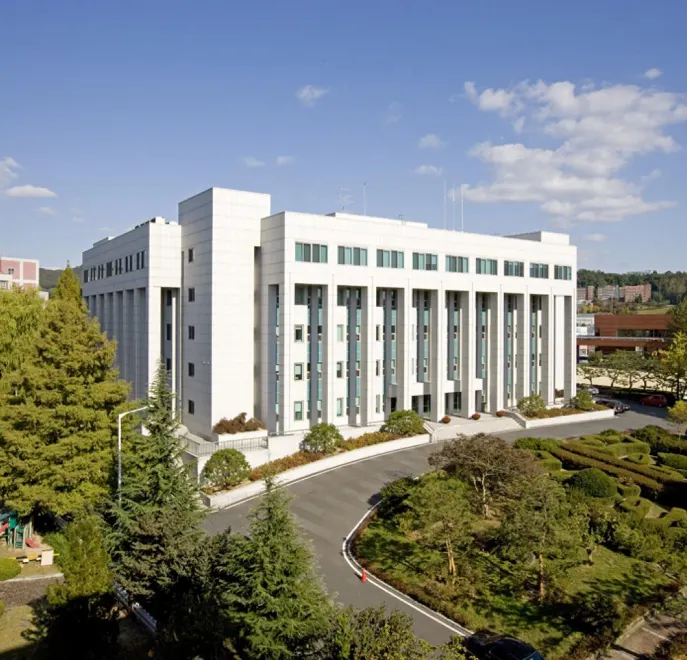
Woosong University is a four-year institution in Daejeon with seven colleges and five graduate schools. Together with its affiliated two-year institution, Woosong College, it serves approximately 14,000 students across a growing, highly international campus.
The Woosong Information Center manages IT systems across both institutions. Led by Director of Information Systems Kim Byeong-ryeol, the team is responsible for keeping the university’s critical infrastructure reliable, secure, and continuously available.
With roughly 3,500 international students, Woosong operates as a truly global university. At the same time, university leadership is actively driving a strategy to become an AI-leading institution, promoting the adoption of AI across both education and administrative operations.
That strategic focus shaped how Woosong evaluated physical security. Rather than basic recording, the IT team sought a platform that could support modern operations with AI-powered investigation workflows—improving visibility, accountability, and day-to-day efficiency across critical IT environments.
The challenge: enhancing visibility and accountability across critical IT spaces
In the past, Woosong’s physical security tools were largely siloed. Cameras and access control operated independently and were used mainly for basic monitoring—making it difficult to investigate confidently when questions arose.
For the IT organization responsible for sensitive infrastructure, that created real friction:
Investigations took too long. Searching for historical footage often meant scrubbing video manually—an impractical process when teams needed quick answers.
Third-party access increased complexity. In the main communications room, it wasn’t just network equipment—there were also telephone systems and DID exchanges. Vendors and telecom partners entered frequently to perform work, and when issues came up, it was difficult to trace what happened—even when teams knew the approximate date and time.
Multi-site oversight required more efficiency. Woosong’s east and west campuses each have communications backbone rooms outside the main center, creating remote locations that still required reliable visibility.
Kim also noted that as physical security becomes more important for data center–like environments, the university needed an approach built around integration, speed, and ease of management—not separate tools that are harder to scale and investigate across.
Why Verkada: one unified platform with AI-Powered workflows
Verkada helped the university move beyond disconnected systems and manual investigations.
“Traditionally, physical security products were mostly limited to cameras or door locks, and these systems were not integrated,” Kim explained. “Verkada integrates air quality sensors, security cameras, and access control into a single system.”
AI capabilities were also a key decision factor. With Verkada, teams can use AI-powered search tools to locate relevant footage quickly—reducing the operational burden of manual review and enabling faster, more confident investigations when issues arise.
The solution: integrated monitoring across critical IT environments
Woosong deployed Verkada across the IT operations center and key supporting locations, focusing on both visibility and environmental awareness.
IT operations center
In the server room, UPS room, and main communications room, the team uses:
Cameras to maintain continuous visibility
Access control to support controlled entry and strengthen accountability in sensitive rooms
Air quality sensors to monitor conditions that can impact equipment and operations
East and west campus backbone rooms
Because the campus is split into east and west locations, Woosong also installed cameras in each campus’s communications backbone room to maintain visibility into remote equipment areas.
Real-world impact: faster investigations and clearer accountability
After deploying Verkada, staff immediately noticed the difference in how quickly they could investigate activity and reconstruct what happened when questions arose.
AI-powered search makes video easier to use
Kim shared that in the past, finding specific historical moments in video was difficult. With Verkada, searching by time and relevant attributes is significantly easier—helping teams retrieve footage quickly without spending hours scrubbing video.
Seeing the full story with movement paths and unified timelines
One feature that stood out was Motion Search with Trajectory Analysis, which helps visualize how someone moved through a space—for example, entering an equipment room, stopping at one rack, moving to another, then returning—captured as a clear path through the scene.
Kim noted that while this was impressive, it also created a greater sense of responsibility for administrators, since it becomes much easier to reconstruct what happened. In environments with frequent third-party access, that clarity helps reduce guesswork and support more confident investigations.
More broadly, these workflows align with Verkada’s AI-powered Unified Timeline, which brings sightings from multiple cameras into a single, chronological view—helping teams reconstruct activity end-to-end when investigations extend beyond a single room or device.

From investigation to documentation: verification and incident reporting
Woosong staff regularly submit security-related reports. Instead of relying on recollection to confirm when vendor work occurred, teams can verify activity directly in Verkada—supporting more accurate documentation during busy periods.
This ability to quickly find, validate, and organize relevant footage with Incident Management tools also simplifies how incidents are documented and reviewed, helping the IT team produce clearer records when questions arise or formal reports are required.
Kim emphasized that this visibility should be viewed as a tool that benefits everyone: it can validate what happened during an incident and support fairness through objective verification.
Beyond security: remote collaboration and operational efficiency
One of the most distinctive moments from the deployment came from using Verkada cameras to improve day-to-day IT operations—not just security.
When installing a new database server, Kim typically would travel to the server room to coordinate rack placement. Instead, he monitored the room through Verkada cameras while discussing options over a phone call. When a colleague flagged a cable-length limitation, Kim could see the situation in real time and make the decision immediately—without an onsite visit.
The result was smoother coordination, faster decisions, and less disruption to daily work.
Built to scale: a platform designed for long-term IT operations
Woosong also valued how easy Verkada is to expand compared to controller-based systems that require complex licensing and infrastructure changes. Whether adding one device or many, the platform supports gradual, budget-friendly growth—without forcing large, upfront infrastructure investments.
Long hardware warranties—up to 10 years—help the IT team plan with greater confidence, reducing long-term replacement risk as the environment scales. In addition, automatic over-the-air software and firmware updates allow Woosong to receive new features and security updates over time, without manual maintenance or downtime.
Looking ahead: predictive insights from air quality data
While Woosong is already benefiting from AI-powered search and improved investigation workflows, Kim sees future potential in using sensor data even more proactively. The team plans to expand camera and air quality sensor coverage to additional buildings and environments—including dormitories and other remote facilities—where staff have historically had limited visibility into real-world conditions.
He hopes that as air quality and environmental data accumulates over time, AI could help enable predictive monitoring—such as identifying trends that indicate a higher likelihood of equipment instability—so teams can take action before disruptions occur.
A smarter foundation for university IT operations
For Woosong University, Verkada is not simply a set of cameras or door locks. By unifying video, access control, and air quality monitoring in one platform, the university has improved investigation speed, strengthened accountability in critical IT spaces, and enabled more efficient collaboration across IT operations—while laying the foundation for a more scalable, AI-enabled future.