
Key stats
Campus-wide modernization initiative designed to replace manual keys across admin, residential, and shared spaces
Estimated $1.2 million in infrastructure costs avoided by using wireless locks instead of electrifying roughly 400 doors across campus
Investigations reduced from 3–4 hours to as little as 30 seconds to 1.5 minutes — a roughly 99% reduction in search time
Person of interest alerts can notify staff in seconds
Safer operations start with a deeper commitment to care
At Kāhala Nui, resident safety is inseparable from dignity, wellbeing, and peace of mind. Widely regarded as one of Hawaiʻi’s premier person-centered life plan communities, Kāhala Nui is built around the island tradition of ʻohana — fostering an environment where residents and associates live and work as a family. Located in Waialae-Kāhala, the community offers private apartment homes for independent living as well as Hiʻolani Care Center for assisted living, skilled nursing, and memory support.
That mission shapes every part of the resident experience. Kāhala Nui’s approach to care is grounded in respect for each individual, with services designed to honor residents’ preferences, support their emotional needs, and enrich daily life. As a nonprofit organization, Kāhala Nui also extends that mission beyond its campus, supporting seniors across Hawaiʻi through community partnerships, education, and caregiver resources.
For Wesley Ramos, Director of IT at Kāhala Nui, that meant creating an environment where safety technology could support — not disrupt — the welcoming, high-touch experience residents and families expect. Before Verkada, the community relied on an aging camera system and a heavily manual key process that made it harder to monitor activity, investigate incidents, and manage access across the property.
Ramos said the old environment left the team with significant blind spots. “There were a lot of things we were missing,” he said. “There was a feeling across the community that so much was happening, and we just didn’t have enough resources to patrol everywhere or maintain visibility across certain parts of the property.”
For a large, service-oriented senior living community like Kāhala Nui, those gaps affected more than security alone. They shaped how confidently staff could respond, how quickly they could investigate incidents, and how much reassurance they could offer residents and families.
Moving beyond blind spots and manual keys
When Ramos joined Kāhala Nui, the community’s CCTV system no longer matched the needs of the property. The team needed stronger coverage, better search capabilities, and a more reliable way to understand what was happening across campus.
At the same time, many doors were still managed with physical keys — in Ramos’s words, “many, many keys.” That created daily friction. Staff had to sign keys in and out, physically open doors for certain requests, and manage the burden of maintaining a large manual key system. Lost keys had also created added expense and disruption. As Ramos put it, “Prior to my arrival, they’d already had situations where certain areas had to be rekeyed.”
For Kāhala Nui, the problem was not just outdated hardware. It was the combination of limited visibility and manual processes across a property that needed to feel both safe and welcoming.
Connecting doors, video, and investigations
After seeing the impact of Verkada cameras, extending the platform into access control felt like the natural next step.
For Ramos, the appeal was not just modernizing doors. It was bringing access events, video, and investigations into one connected system. “It made sense to bring everything behind a single pane of glass,” he said. “We already had the cameras, so access control felt like the natural next step.”
That combination became especially compelling during the evaluation process. What stood out most was Verkada’s ability to connect access telemetry with video evidence and create a clearer picture of what happened during an incident.
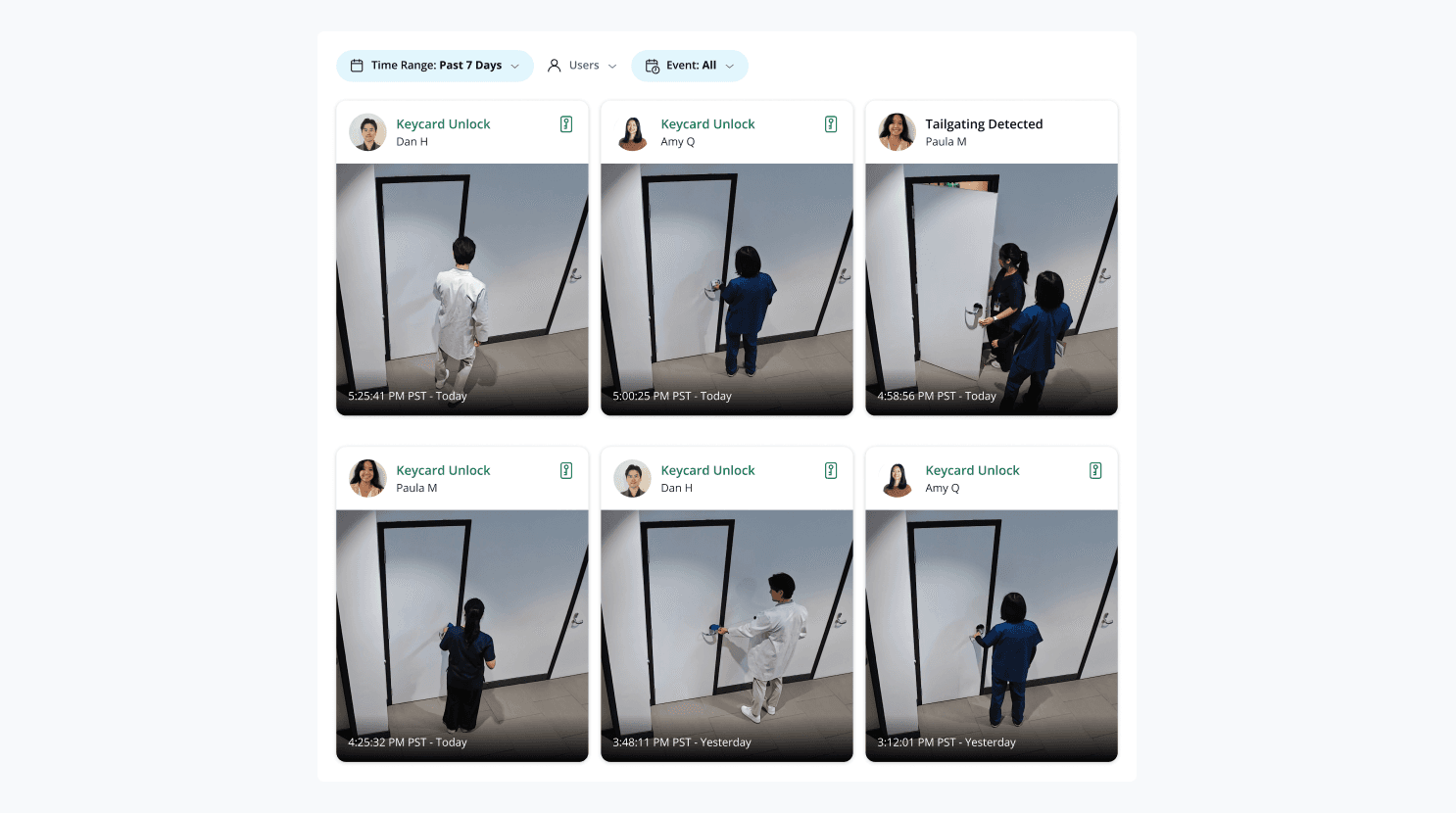
“That was the game changer for us,” Ramos said. “If someone entered the building at a certain time, we could correlate that with video, still images, and everything happening on the property. Being able to stitch that whole picture together was the icing on the cake.”
For Kāhala Nui, that meant moving from a door event to footage and surrounding context much faster, without piecing together information across multiple systems.
Building a keyless campus with wireless locks
Kāhala Nui is now working toward a larger vision of a keyless campus.
“This project is about replacing manual keys across the campus — from admin offices to residential areas to utility and storage spaces,” Ramos said. That vision was reinforced by leadership: “Our CEO made it simple: if you see a manual key, replace it with access control.”
Wireless locks made that goal practical. Rather than electrifying every interior door, Kāhala Nui can extend access control to more doors with less time, cost, and disruption to residents and staff. The deployment includes AL54 wireless locks, the AC12 controller, and the WH32 wireless hub, giving the team a centralized way to modernize doors across the property.
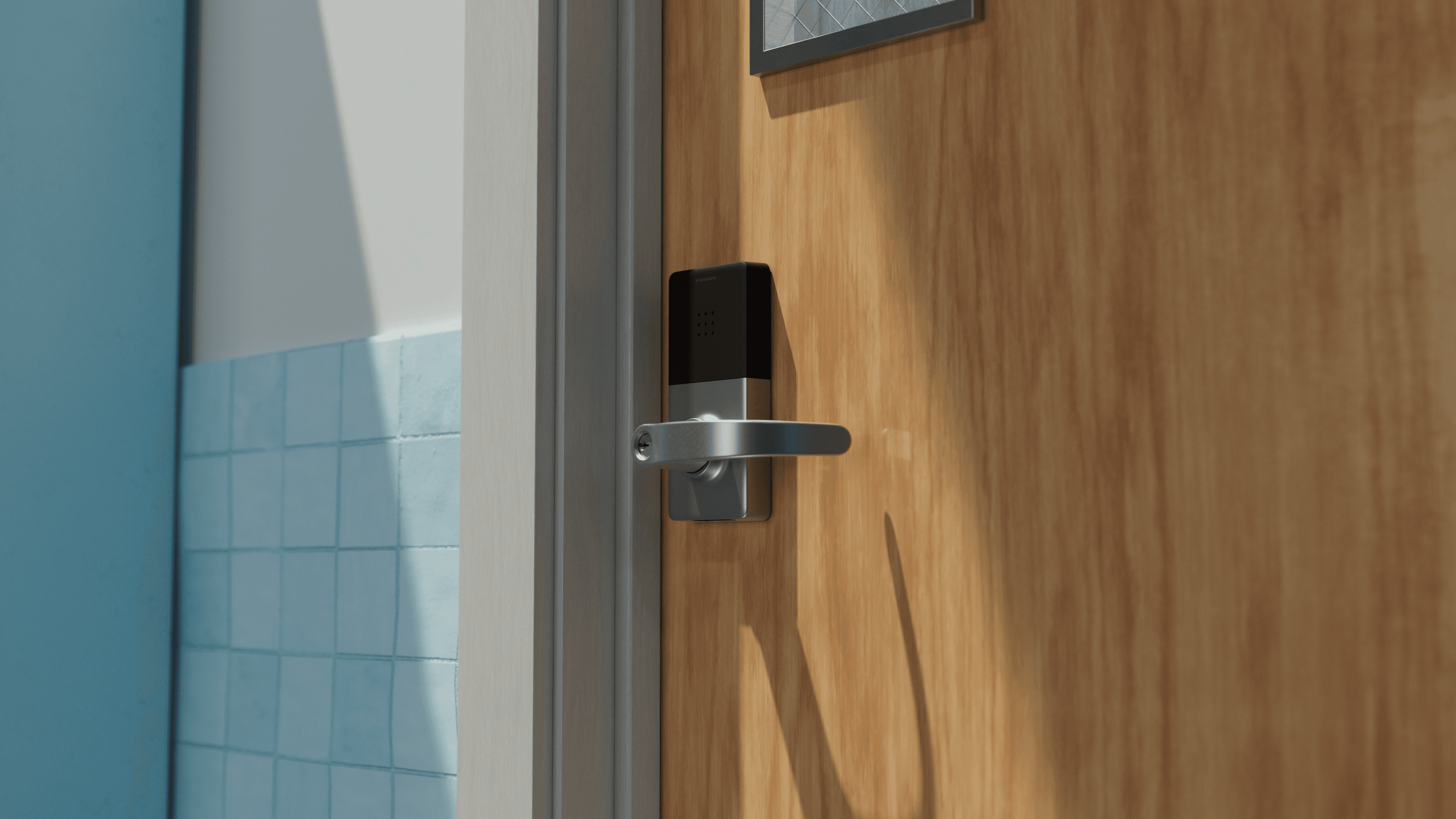
Based on early planning estimates, Kāhala Nui expects to avoid roughly $3,000 per door in electrification, wiring, and installation costs across approximately 400 doors — or an estimated $1.2 million overall. Just as importantly, the wireless approach helps accelerate rollout while replacing a legacy lock environment that is already aging out of support.
The rollout has also been easier than Ramos expected. “I’m not an access control guy, but watching the installation, I thought, ‘That’s all you have to do? That’s pretty cool,’” he said.
That simplicity continues after installation. Everything from pairing locks with wireless hubs to setting user access and door schedules is managed in Command, without the need to hop between applications. For Kāhala Nui, that helps avoid the complexity that often comes with older, fragmented systems.
Wireless locks may also improve daily life for residents. With support for mobile-based access, Kāhala Nui sees an opportunity to reduce reliance on physical keys and older fobs. “It’s always about improving the resident experience,” Ramos said. “Since many of them have smartphones, we can enable Bluetooth unlock. It just makes it easier for them to access their apartments.”
An everyday tool for staff
Today, Verkada supports workflows across nursing, IT, HR, operations, and the front desk.
Ramos noted that the front desk relies on the system especially heavily because it has become the first place teams turn when something happens on campus. “Whenever there’s an incident, people immediately ask, ‘What does Verkada show?’” he said. “It’s become an everyday tool in our workflow.”
That ease of use has been especially important as Kāhala Nui expands into more advanced security workflows. Ramos said the platform remains approachable for the people using it day to day. “There’s a lot of complexity in the back end,” he said, “but on the front end it’s simple. That’s one of the best things about Verkada — it makes management easier for the user.”
For staff, centralized access control also promises a more efficient way to grant, change, and revoke access while reducing the operational burden of managing physical keys across a large campus.
Supporting memory care and family peace of mind
Some of the most meaningful use cases at Kāhala Nui involve resident safety.
Ramos highlighted the importance of visibility in memory care areas, where some residents may be prone to wandering and teams need to locate them quickly. “That’s especially important in memory care,” he said. “We have residents who are memory-challenged, and Verkada helps us locate them faster.”
That same visibility matters in independent living areas, where family members, visitors, and vendors regularly come and go. A clearer view of who is entering and leaving gives residents added reassurance and helps staff maintain stronger oversight across the property.
The benefit extends to families as well. “It gives families peace of mind,” Ramos said. “If something happens to their loved one in a hallway or somewhere outside on campus, we know we have a way to go back, find it, and understand what happened.”
Improving entry workflows with intercoms
Intercoms are already helping streamline entry management at key access points.
Kāhala Nui has deployed Verkada intercoms at its main associate entrance, where staff use them to verify people who need assistance getting in. Even before access control is fully extended to those entrances, Ramos said the impact has been clear: “Intercom alone was a game changer for us.”

Today, teams can confirm who is pressing the call button and assist people who may not know the code or need help entering. As access control rollout continues, Kāhala Nui expects that experience to become even more seamless, allowing staff to verify a visitor or associate and unlock the door from the same system.
For a senior living community, that kind of workflow is especially valuable. It helps the team maintain a welcoming environment while adding greater control at key entrances, particularly after hours or during busy periods at the front desk.
Faster response when seconds matter
Kāhala Nui is also using Verkada’s AI-powered capabilities to improve response across the community.
Slip-and-fall alerts are enabled across campus and are already helping staff identify and locate residents who may need assistance. Ramos was direct about the value: “Slip and fall has been a really useful tool for us. It helps us respond faster and locate residents who may have fallen within the community.”

The team has also used person of interest alerts to identify individuals who were not supposed to be on campus and respond more proactively when they appeared.
In one case, Ramos described using Verkada to help locate a resident who had slipped away with a crowd, allowing the team to determine which entryway the individual used and find them quickly. For a senior living community, those kinds of moments reinforce the value of being able to detect, verify, and act faster.
99% faster investigations
One of the clearest operational improvements at Kāhala Nui has been investigation speed.
With the previous system, reviewing footage was slow and manual. Ramos said teams often had to review video second by second, without the benefit of scrubbing or search tools. “It could take a good three to four hours just to find what you were looking for,” he said. “There was no scrubbing feature. There was no search feature.”
With Verkada, those same investigations are dramatically faster. “Now it takes about 30 seconds to a minute and a half to find footage,” Ramos said.
Alerting has also made the team more proactive. After adding a recurring unwanted visitor to a person of interest list, staff began receiving alerts almost immediately when that person entered campus. “Within seconds, we’d get the alert,” Ramos said.
That speed helps the team respond more confidently while reducing the time and effort required to investigate incidents across the campus.
Built for the future of resident safety
For Kāhala Nui, modernizing security is about more than deploying new hardware. It is about building a safer, more responsive community for residents, staff, and families.
As the campus continues rolling out access control and wireless locks, the team is creating a stronger foundation for day-to-day operations, faster response, and a more seamless resident experience. From replacing manual keys to speeding investigations and improving visibility in sensitive areas, Kāhala Nui is building a more connected approach to resident safety — one that supports both immediate operational needs and long-term modernization across the community.
“It’s very important that we take care of our seniors here in Hawaii,” said Ramos. “That’s the goal, the mission, and the vision of Kāhala Nui.”
