Key Results
Brought video security, access control, visitor management, and mailroom workflows into one platform
Improved visibility across Asia-Pacific (APAC) with a true single pane of glass
Reduced investigation time from hours to minutes with AI-powered search and Unified Timeline
Simplified roll-outs across multiple offices and markets
Built a stronger long-term ROI case, with expected payback in around three years
Background
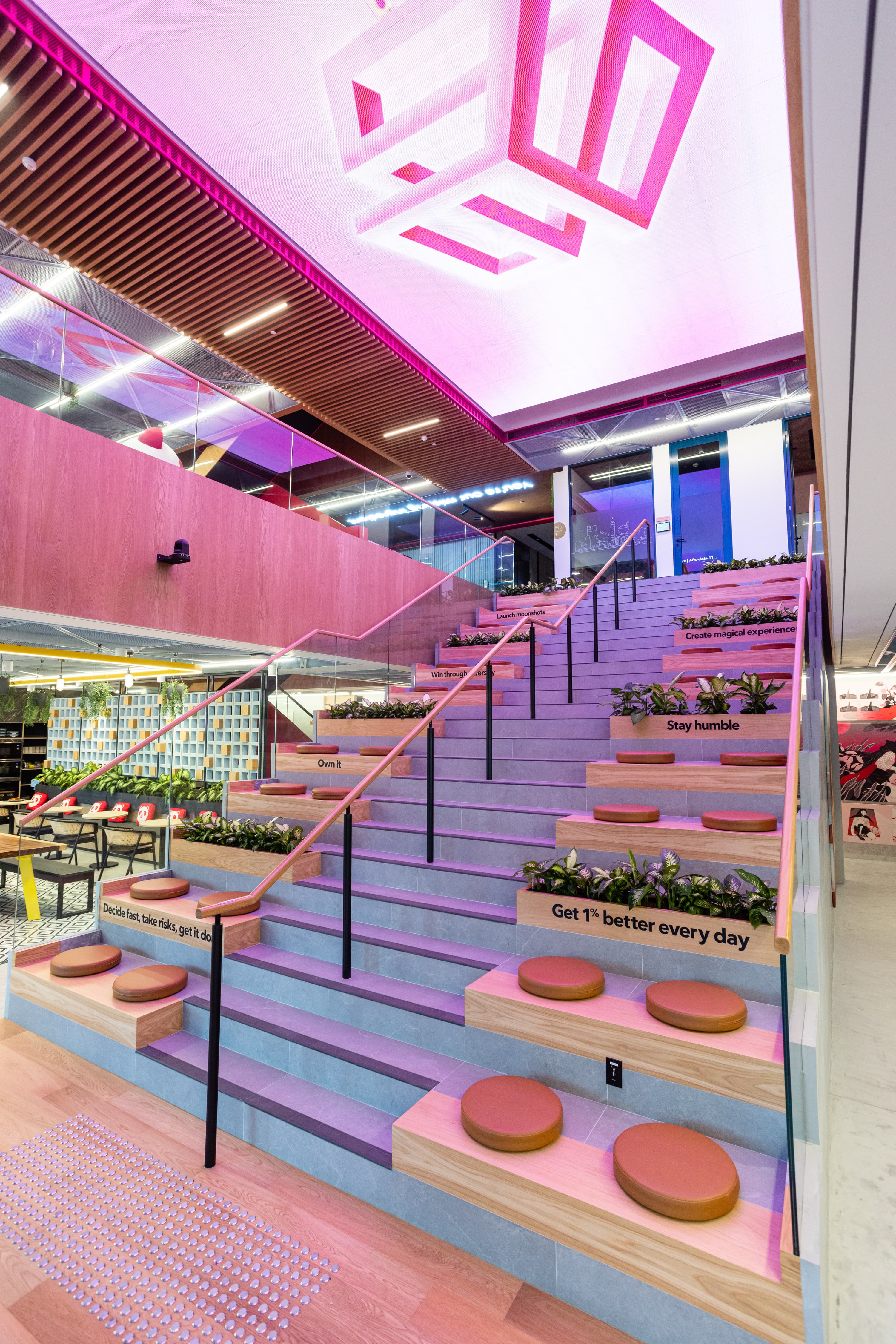
A subsidiary of Delivery Hero, foodpanda has grown far beyond food delivery. What started in Singapore in 2012 as a platform for fast meal delivery has become a go-to app for food, groceries, and everyday essentials across Asia.
As the business expanded, foodpanda needed the systems behind the scenes to keep pace. Across APAC, teams were supporting a growing footprint of offices and workplace operations, making consistency, visibility, and ease of management increasingly important.
Alex Loo, Head of IT, oversees 10 APAC markets with a team of more than 20 people across the region. For him and his team, physical security needed to be easier to manage, easier to scale, and better aligned with the pace of the business.
Challenge
Before Verkada, foodpanda’s security setup was spread across different tools, with each market operating a little differently. The company was using one system for CCTV and access control, and another for visitor management and parcel or mailroom notifications. That made it harder to maintain visibility, keep processes consistent, and scale without adding more complexity.
The issue was not just ageing hardware. The old setup had become fragmented and manual, which created more work for both IT and Workplace teams. Even straightforward investigations could involve slowly loading footage, downloading clips, and reviewing events camera-by-camera.
“Everything is now consolidated and standardised in one place, which has made it much easier for both IT and Workplace teams to manage.”
Why foodpanda chose an all-in-one approach
foodpanda was not looking for a tool that solved just one piece of the problem. The team wanted a system that could bring video security, access control, visitor management, and mailroom workflows together in one place. It also needed to be easy for Workplace teams to use and flexible enough to integrate with tools like Okta and Slack.
Alex pointed to three main reasons the team moved forward: AI features, cost, and ease of use. Just as important was having one system across locations. Instead of asking teams to switch between separate tools or manage different setups in each market, Verkada gave foodpanda a more unified approach built around a single pane of glass.
“Instead of having two separate systems, we now have a single-pane-of-glass approach where I can go in and see everything.”
That made a difference for both IT and Workplace teams. With the old setup, even a straightforward investigation could involve slowly loading footage, downloading clips, and reviewing events camera by camera. With Verkada, that process became much simpler. The system has also been easy enough for Workplace teams to manage day to day without heavy oversight from IT leadership.
Creating a standardised model across APAC
foodpanda has already deployed Verkada in Singapore and Thailand, with Malaysia and the Philippines in progress, and additional markets such as Cambodia and Pakistan underway. The roll-out is focused on key head office locations across the region, with the longer-term goal of giving teams a more standardised operating model as the business continues to grow.
Today, foodpanda uses Verkada cameras, access control, intercoms, air quality sensors, and visitor management across its offices. Mailroom workflows are also part of the broader consolidation effort, with additional workplace features still being rolled out. The team is integrating Verkada with tools such as Okta SSO, SCIM, and Slack so security workflows fit more naturally into the systems employees already use.
That consistency has made the system easier to manage and easier to scale. For foodpanda, scalability meant being able to roll out the same model in new markets without recreating the same complexity each time. Instead of building a different setup office by office, the team now has a more standardised approach it can extend with less overhead.
How AI helped speed up investigations
One of the clearest improvements so far has been speed. Alex said the most useful capability today is Verkada’s AI-powered search, particularly for Workplace teams. Instead of manually checking footage camera-by-camera, users can describe what they are looking for and find relevant footage faster.
AI-Powered Unified Timeline then helps connect those moments across cameras in one chronological view, so teams can piece together the full sequence of events without the same amount of manual work. Together, these tools make investigations faster, more intuitive, and far less time-consuming.
That matters because Workplace teams are juggling much more than security alone. Time spent reviewing footage is time taken away from the rest of the work needed to keep offices running. By making footage easier to search, connect, and review, the team spends less time on guesswork and more time on other high-impact priorities.
“With Verkada, we can pull up footage online straight away instead of wasting time downloading and searching through clips.”
Alex said investigations that once took hours can now often be completed in minutes. That shift, from manual review to much faster search and retrieval, has become one of the clearest day-to-day benefits of the system.
Making the ROI case over the long term
For foodpanda, the decision was less about one major incident and more about the bigger picture: efficiency, simplification, and cost control over time.
As the team evaluated its options, it became clear that the previous environment was expensive to maintain. Rising renewal costs made it harder to justify continuing with a fragmented setup, especially when each market operated differently, and centralising the old model would have required significant additional effort. Internal cost comparisons also showed significantly higher annual software costs in the legacy setup, particularly on the video side, which made the case for consolidation even stronger.
When evaluating ROI, the team looked at more than upfront spend. foodpanda compared the long-term cost of software, hardware, maintenance, warranty, and the operational burden of managing fragmented systems across multiple markets. That included the effort required to maintain separate systems, the time spent on investigations, and the overhead involved in scaling and standardising different local setups. Alex said the company expects to reach ROI in around three years compared with its previous setup, even while accounting for new cameras and licensing. He also pointed to the 10-year camera warranties as part of that value equation.
That longer-term view shaped the decision. Rather than focusing only on a one- or two-year comparison, Alex’s advice is to look at the bigger picture.
“If you only compare one or two years, you miss the bigger picture. The real ROI shows up when you look at the longer term — three years and beyond.”
Where the platform could go next
foodpanda is also exploring ways to get more from the system beyond traditional security use cases. One example is Bluetooth-enabled access control, which the team sees as a way to make entry smoother and support future attendance-related workflows. Mobile-based entry could also help address situations where employees tailgate instead of tapping in with a physical card.
The team is also interested in air quality sensors as part of a broader workplace strategy, reflecting an interest in supporting employee wellbeing alongside physical security. At the same time, its office relocation created an opportunity to redesign the entry experience. With intercoms already part of the deployment, foodpanda is building towards a more connected front-of-house setup, where features such as flexible call routing, AI-powered voice directory, and live translation can help simplify visitor communication and create a seamless arrival experience.
Built to support the next stage of growth
For a company operating across APAC, security cannot remain fragmented for long. It needs to be practical to manage, easy to scale, and consistent from one site to the next.
With Verkada, foodpanda replaced disconnected infrastructure with a centralised system that brings together video security, access control, visitor management, and mailroom workflows in one place. The result has been better visibility, faster investigations through AI-powered search, a simpler model for rolling out new offices, and a clearer long-term ROI case.
As foodpanda continues to grow across APAC, it now has a security system that can grow with it — one that helps teams move faster, work smarter, and support the business with greater confidence.
“As the business keeps growing, we need systems that can scale with us. Having everything standardised and managed in one place puts us in a much better position for what comes next.”