Key Results
$800K+ in estimated annual savings from reducing legacy CCTV infrastructure, storage, and maintenance costs as Funlab scales its cloud migration.
~$300K/year in storage savings by avoiding the need to back up legacy NAS footage to the cloud.
Simplified audits: Consolidated reporting into one centralised view for Verkada-managed venues, compared with 35–45 separate venue reports on legacy systems.
Enabled 30-day cloud backup with automatic uploads, typically daily.
Strengthened privacy controls: Most venue staff have live-viewing access only, while recorded footage is restricted by role and venue.
Advancing AI-powered prevention: Expanding the use of intelligent activity detection and alerts to shift from reactive incident reporting toward proactive risk identification and prevention.
Background
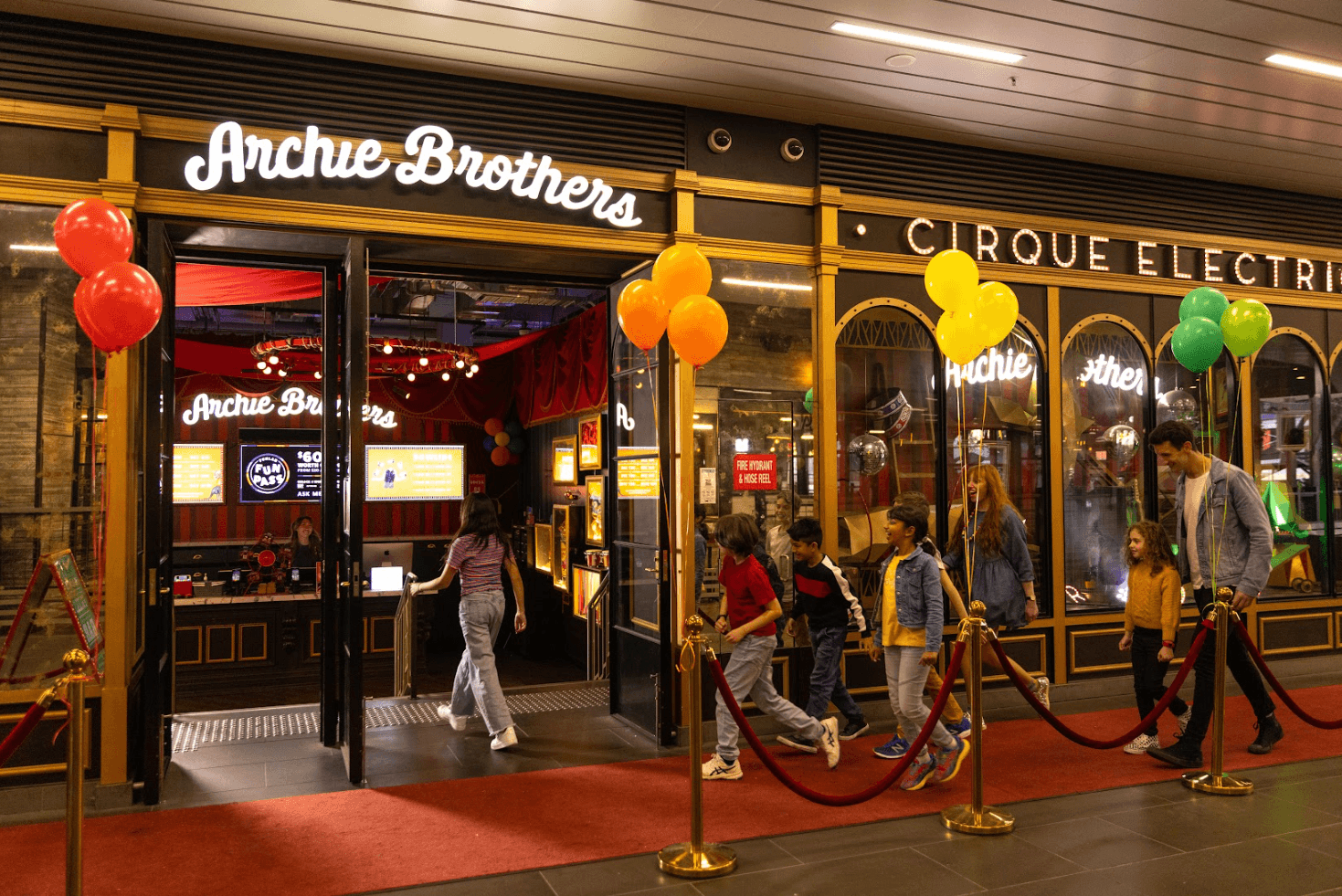
Funlab is the world's premier creator of competitive socialising experiences, spanning eight brands and 80+ locations across Australia, New Zealand, and the USA — including Strike Bowling, Holey Moley Golf Club, Hijinx Hotel, Archie Brothers, B. Lucky & Sons, La Di Darts, Red Herring Escape Rooms, and Juke's Karaoke. With 2,500+ employees and venues designed for fast-moving guest experiences, Funlab needs security systems that can keep up without compromising privacy or adding operational complexity.
For Ben Wild, Chief Technology Officer at Funlab, supporting a growing portfolio of venues means ensuring that technology can scale without adding unnecessary complexity. His team oversees the critical systems that keep venues operating, from core infrastructure and point-of-sale systems to bespoke games equipment and physical security.
As Funlab expanded internationally, the business began adopting Verkada's cloud-managed approach, initially across its U.S. venues and newer locations in Australia. Today, the company is working toward a more consistent security infrastructure across its global footprint.
The Challenge: Reducing the Hidden Costs and Risks of Legacy CCTV
Across several older venues in Australia, Funlab relied on traditional on-premises CCTV deployments: local network-attached storage (NAS), manual maintenance, and site-by-site administration. As venues expanded and hardware aged, that approach became increasingly difficult and costly to sustain.
For Ben's team, the priorities were clear: meet retention requirements, stay audit-ready, protect guest privacy, and avoid building an expensive backup infrastructure just to keep legacy systems reliable.
"We need to ensure the data is available, secure, and compliant — and that no one's accessing footage that shouldn't be," Ben emphasised.
For venues operating under liquor licensing requirements, the stakes are particularly high.
"If we lose liquor licensing, we may as well shut the venue down," Ben added.
What made the legacy model difficult:
Retention and continuity: Meeting minimum footage retention requirements while reducing the risk of a single point of failure.
Audit readiness: Validating recording configurations and privacy standards without checking each venue individually.
Backup economics: Avoiding the significant costs of retrofitting cloud backup for legacy NAS storage, including an estimated ~$300K annually in storage costs alone.
Fleet maintenance: Keeping firmware current across "hundreds, maybe thousands" of cameras to reduce security exposure.
Access governance: Ensuring teams have the visibility they need without granting unnecessary access to recorded footage.
Why Verkada: A Cloud-First Approach That Scales Globally
Funlab's move to Verkada began as the business expanded into the United States. With different infrastructure expectations and a preference for a cloud-first model, the team sought a CCTV system that could be deployed quickly without adding more on-premises servers and storage appliances at each venue.
Verkada stood out for its straightforward deployment and centralised management. Once cameras had internet connectivity and the venue network was in place, Funlab could bring sites online quickly and manage them remotely.
As the platform proved itself, Funlab's broader security strategy evolved. New venues in Australia were standardised on Verkada, while older locations continued using existing CCTV systems to maximise their prior investments.
Now, as those locations approach hardware refresh cycles, Funlab is planning a phased migration. The team is also exploring Verkada Command Connector to bring compatible legacy cameras into Command where appropriate, allowing it to modernise security operations without requiring every location to replace its existing hardware at once.

What Changed with Verkada
Cloud Backup Without the "Backup Project"
With legacy CCTV, ensuring footage could be recovered after a hardware failure meant managing additional infrastructure, storage capacity, and ongoing maintenance. For a business operating dozens of venues, those costs could add up quickly.
With Verkada, Funlab enabled 30-day cloud backup through a simple configuration setting rather than a complex, multi-system rollout.
"With Verkada, it's a tick box. You back up 30 days' worth of data, and that's it," Ben explained.
Backups upload automatically, typically once per day, helping ensure footage remains available even if something happens to a device. This approach eliminates much of the infrastructure and administrative overhead associated with maintaining separate backup systems at every venue.
Maintenance That Scales
Managing firmware updates across a large camera fleet was another challenge with Funlab's legacy CCTV infrastructure.
"We can't employ someone just to go around upgrading firmware," Ben said.
With Verkada, automatic software and firmware updates help keep devices current without requiring IT staff to manually maintain each camera. This reduces operational overhead while helping Funlab minimise the security risks associated with outdated systems.
For the IT team, the benefits extend beyond firmware management.
"You're not worrying about updates. You're not worrying about changing usernames and passwords. You don't have to touch any of that," Ben noted.
By reducing routine maintenance and administrative tasks, Funlab can focus its IT resources on initiatives that directly support venue operations and the guest experience.

Audit-Ready Visibility in One Place
Meeting compliance requirements across multiple venues also demands consistent oversight of recording configurations, retention settings, and privacy controls.
Previously, validating these settings meant checking individual CCTV systems across 35–45 venues. With Verkada Command, the team can review configurations centrally across its Verkada-managed locations.
"With Verkada, I can check all venues in one report. With the on-prem system, I have to run 35 or 45 separate reports," Ben said.
Centralised visibility makes it easier to verify that recording standards are being followed, audio recording is disabled where required by policy, and access permissions remain appropriately configured.
Instead of spending time gathering information from separate systems, the team can assess configurations from a single platform, making compliance validation more efficient as additional venues migrate.
Privacy and Security Controls Built for a Guest-First Brand
As an entertainment and hospitality business, Funlab places strong emphasis on protecting guest privacy while giving venue teams the visibility they need to maintain safe, well-managed environments.
Funlab uses venue-specific permissions so employees can only access cameras relevant to their locations. Most day-to-day users are limited to live viewing, while access to recorded footage is restricted to authorised roles, including venue managers, operations, Workplace Health and Safety (WHS), and HR.
Ben noted that limiting playback access helps reduce the risk of footage being viewed or shared inappropriately.
The team also uses single sign-on (SSO) to streamline authentication, strengthen access governance, and support auditability.
Together, these controls help Funlab balance operational visibility with its commitment to protecting guests and employees.
From Incident Reporting to Proactive Prevention with AI
Video security already plays an important role in Funlab's everyday operations, helping teams investigate slip-and-fall incidents, support HR and theft investigations, and verify kitchen handling practices following allergen-related concerns.
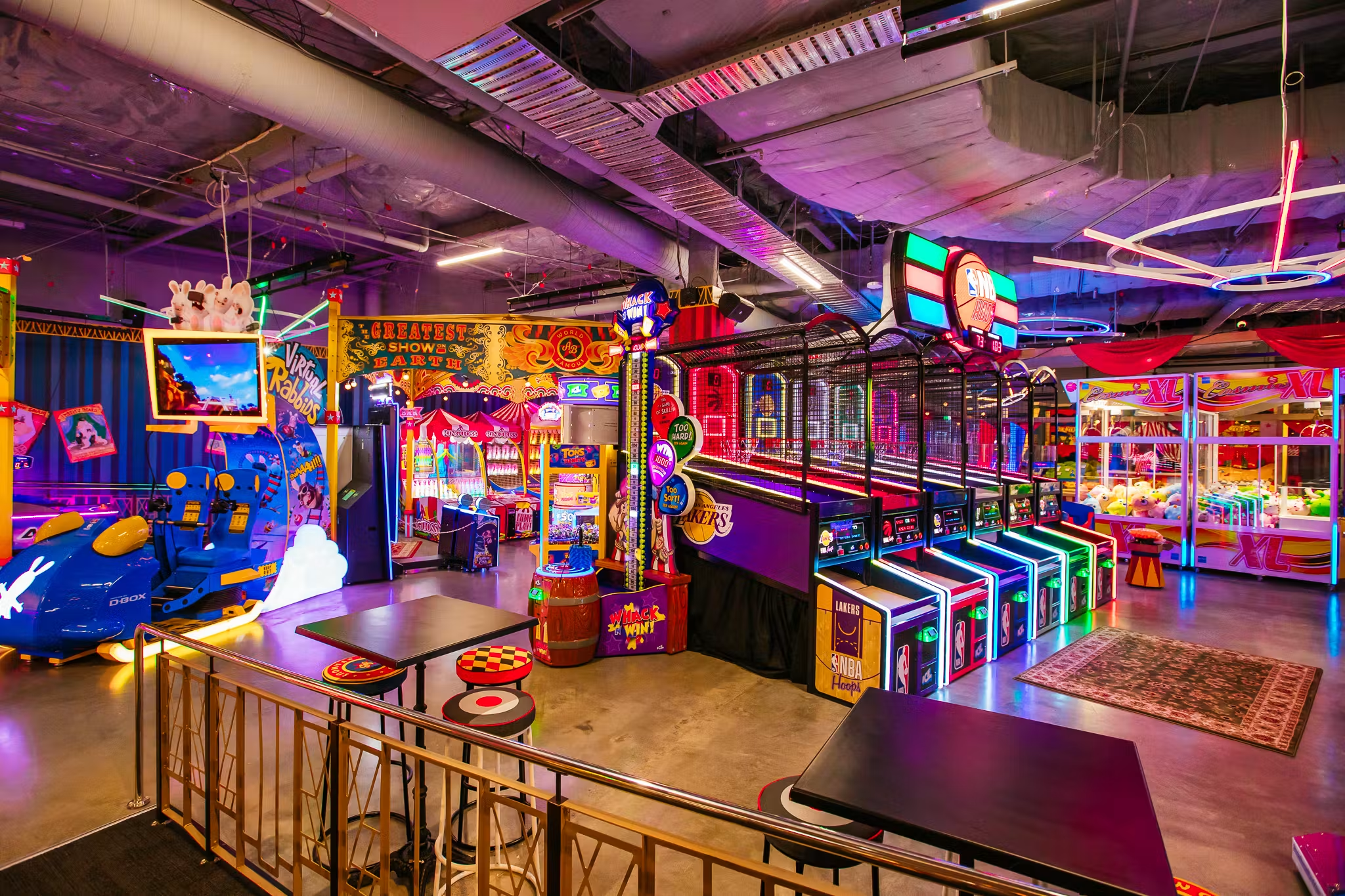
One memorable example came from Hijinx Hotel, where staff noticed an unusually high score on one of the venue's games. Reviewing footage revealed the cause: guests had climbed over a barrier and triggered the scoring sensors directly to "game the system."
While video helped the team understand what happened, the incident also highlighted an opportunity to identify potentially unsafe behaviour before it leads to a larger issue.
Looking ahead, Funlab is focused on shifting its approach from incident detection and reporting to proactive incident prevention using Verkada's AI-powered capabilities. Rather than relying primarily on footage to investigate events after they occur, the team aims to use intelligent activity detection and real-time alerts to identify potential risks earlier and enable faster intervention.
By expanding its use of AI-powered alerts for activities such as line crossing and potentially unsafe behaviour, Funlab aims to give venue teams the information they need to take action before situations escalate. This could help teams identify when guests enter restricted areas, cross safety boundaries, or engage in potentially dangerous activities, allowing staff to respond more quickly.
For Funlab, this shift represents an important next step in its security strategy: moving beyond documenting incidents to helping prevent them, while creating safer environments for guests and employees across its growing portfolio of venues.

Results: A Clearer ROI Case for Scaling Across the Business
For Funlab, the value of moving to cloud-managed security extends beyond replacing traditional CCTV hardware. By consolidating systems and reducing dependence on legacy infrastructure, the business is building a more cost-effective and scalable model for security operations.
Based on internal estimates, Funlab expects:
$800K+ in annual savings from avoiding legacy infrastructure expansion, backup costs, and maintenance labour as its migration progresses.
~$300K/year in avoided storage costs compared with backing up its legacy NAS footprint to the cloud.
Reduced administrative overhead through centralised reporting and configuration management instead of 35–45 separate venue checks.
Improved continuity and resilience through automatic cloud backup supporting footage retention requirements.
Stronger privacy governance through role-based access, venue-specific permissions, and centralised oversight.
These benefits are expected to grow as more locations transition away from legacy CCTV systems.
"Consolidating down to one system reduces overhead," Ben said.
For the IT team, that means fewer systems to maintain, simpler compliance processes, and more time to focus on supporting Funlab's growing business.
Looking Ahead: Building a Scalable Security Foundation for Continued Growth
As Funlab continues to grow across Australia, New Zealand, and the United States, the team is focused on creating a more consistent, scalable approach to security across its venues.
A key priority is gradually transitioning remaining legacy CCTV systems to Verkada, aligning upgrades with existing hardware refresh cycles while minimising disruption to venue operations. Funlab is also exploring opportunities to bring more physical security capabilities onto a unified platform, including expanding its use of access control.
Alongside these efforts, the team sees AI-powered prevention as an important part of its long-term security strategy. By making greater use of intelligent alerts and proactive monitoring, Funlab aims to help venue teams identify and address potential safety risks earlier, rather than relying solely on investigations after incidents occur.
For Funlab, the long-term goal is to simplify security management, strengthen operational visibility, and reduce the complexity of supporting a growing global footprint. With fewer systems to maintain and greater oversight from a single platform, the IT team can spend less time managing infrastructure and more time supporting the experiences that make Funlab's venues unique.