
At a Glance
Investigations reduced from hours to minutes with AI-powered search
Serial fire-alarm offender identified within an hour, preventing ongoing disruption
100+ cameras deployed across five campuses and specialist centres
20-person Estates & Facilities team, with six regular Command users
10-year licences and warranties streamline lifecycle management and reduce upkeep
A Complex FE Environment — and One Manager Keeping It All Running
City of Bristol College is one of the largest further education providers in the South West — and may in fact be the biggest. Each year, it supports over 4,500 full-time 16–19 students and 10,000 part-time students, apprentices, and adult learners across five campuses and several specialist outstations spanning aviation, motor vehicle, construction, SEND, and vocational training. The estate stretches across the city and county of Bristol and into neighbouring South Gloucestershire.
For more than 23 years, Estates and Facilities Manager Christopher (Chris) Gwynne has helped keep this diverse estate safe, operational, and welcoming — overseeing everything from building maintenance and cleaning to catering, waste, and campus security.
“There’s a lot happening across the college on any given day. We’re not a control room team — we respond, investigate, and make decisions quickly.”
The Challenge: A Legacy CCTV System That Couldn’t Keep Up
Before adopting Verkada, the college relied on a traditional recorder-based CCTV system that struggled with the scale and pace of campus life.
Investigations were slow and manual: Reports often came in with vague or incorrect timings, resulting in hours spent scrubbing footage.
New installations took weeks: Running analogue cabling to central recorders was disruptive, expensive, and resource-heavy.
Repositioning cameras required new cabling: Even minor layout changes turned into complex projects.
Scaling across multiple campuses was difficult: Distributed recorders made expansion inconsistent and hard to manage.
Chris needed a modern, scalable approach — one that would reduce workload, not add to it.
The Turning Point: A Trial That Changed Everything
In 2021, after Chris’s manager received a Verkada trial offer via the local police, he asked Chris to look into the platform. Chris agreed to trial Verkada at one campus — and the difference was immediate.
“What I loved straight away was the versatility. If I need a camera somewhere, I just need an IT point.”
Removing NVRs, DVRs, and server rooms eliminated major bottlenecks and made it possible to expand coverage at the pace the college required.
Deployment: From Multi-Week Projects to Same-Week Installs
The first cameras were so straightforward that Chris installed them himself:
Mount the camera
Connect PoE
Bring it online in Command
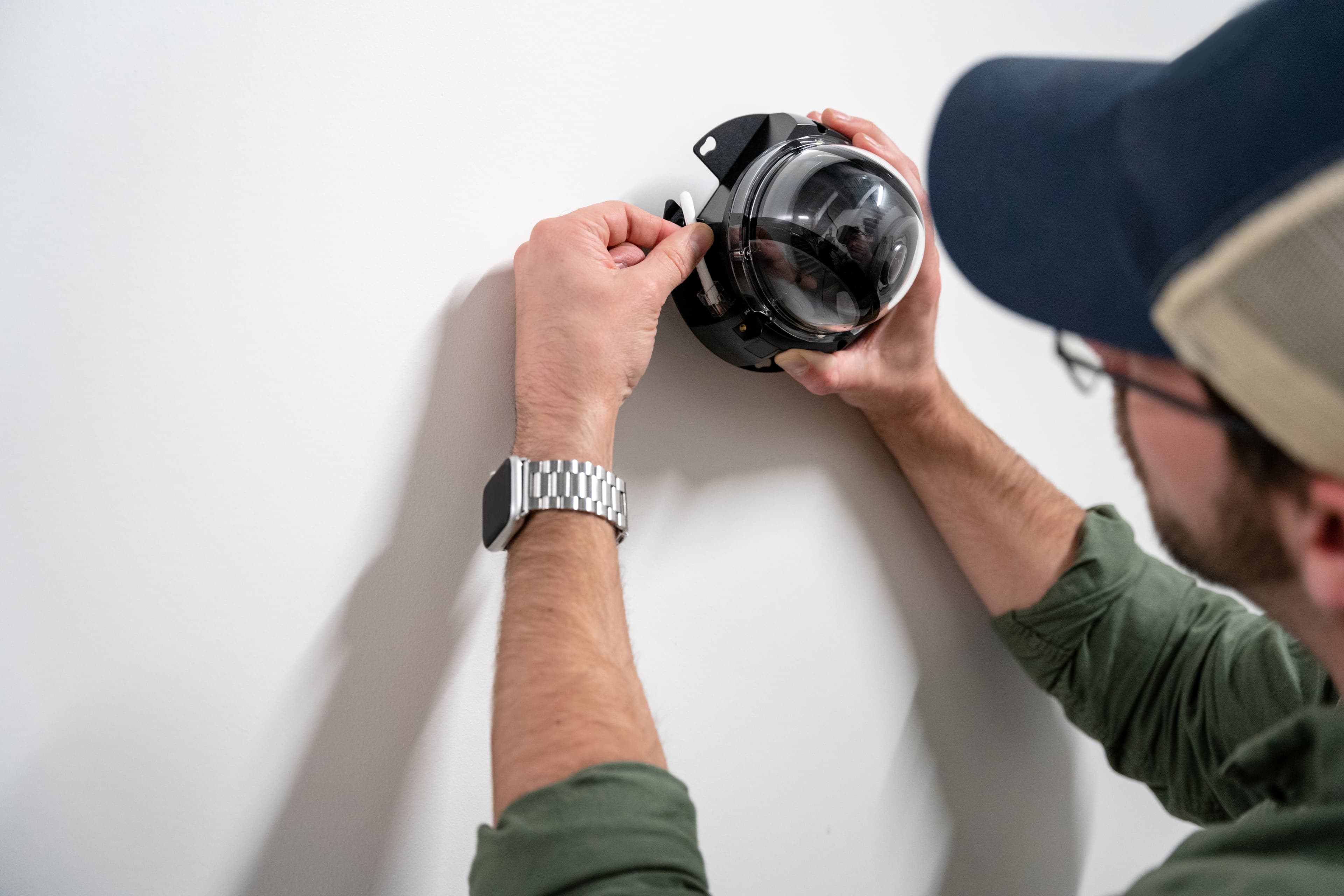
As deployment broadened, he partnered with a trusted local electrician for cable runs while his team handled configuration in the cloud.
Recently, after requesting two new cameras on a Friday, they were installed and online within a couple of hours the following week — a stark contrast to the multi-week installations of the past.
Verkada now allows the college to expand coverage incrementally and with minimal disruption.
Why Fisheye Cameras Became the College’s Go-To Choice
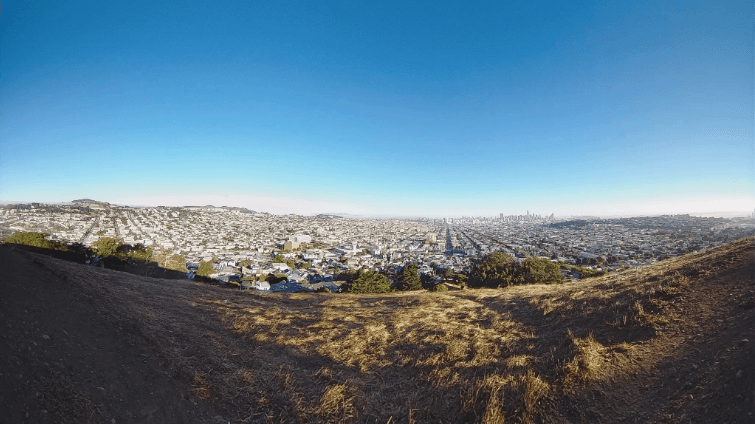
As coverage grew, Chris found Verkada’s fisheye cameras particularly effective for the estate’s workshops, open-plan learning spaces, long corridors, and multi-use classrooms. Unlike fixed-view cameras, fisheyes offer a full 180º panoramic view from a single device — significantly increasing visibility while reducing the number of cameras required.

“A single fisheye lets us see so much more of the room. We can reposition the view digitally without ever touching the camera.”
With digital pan-tilt-zoom, staff can review incidents from multiple angles without losing context. Built-in viewing modes — panoramic, four-way split, and immersive PTZ — allow the team to tailor each device to the room’s layout and purpose.


Chris noted several advantages:
Fewer devices needed for large rooms and circulation spaces
Faster investigations, with complete coverage from one vantage point
Improved clarity compared with traditional fisheye technology
Simple installation, requiring only PoE
Flexible coverage when rooms change function
“If a lab becomes a teaching room, or a workshop gets rearranged, we don’t have to move cameras around anymore. We just adjust the view.”
Fisheyes now represent a significant portion of the college’s deployment, increasing coverage while keeping maintenance low.
A Standout Moment: Stopping a Serial Fire-Alarm Offender
One of the earliest and most impactful wins came at the College Green Centre, where someone had been triggering fire alarms two to three times a week. Staff believed it was the same person — but couldn’t prove it.
After installing Verkada cameras near key call points:
The next activation was captured clearly.
AI analytics tracked the same individual across linked corridors.
Entrance cameras recorded the person arriving around the time of each incident.
The Estates team cross-referenced this with access control and attendance information.
“Within an hour we’d identified the person. They were suspended and off-site.”
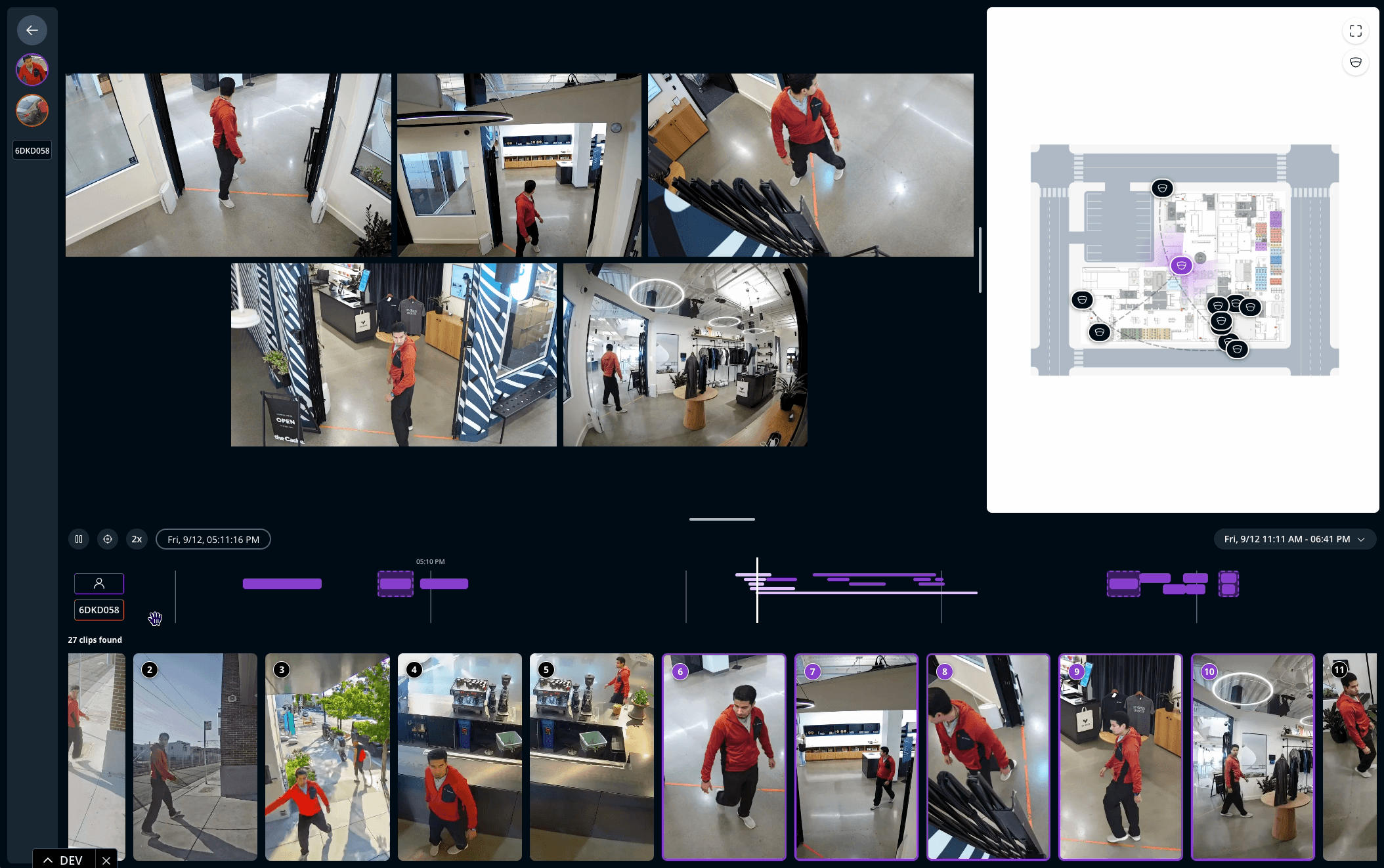
A process that once took hours — or was impossible — became fast, accurate, and conclusive.
Everyday Impact: Faster Searches, Better Safeguarding, Stronger Oversight
Chris’s team does not run a manned control room or watch live feeds. Instead, they use Verkada primarily for retrospective investigations whenever an incident is reported.
Six members of the Estates team now use Verkada regularly to support day-to-day campus safety.
Common investigations include:
Safeguarding and behaviour reviews
Vehicle incidents in car parks
Trespass and unauthorised access
Incidents reported with incomplete or inaccurate timings
With Verkada:
Staff can search by vehicle colour, type, or direction of travel
Motion and attribute filters narrow down long time windows
People and vehicle analytics reconstruct movements far more quickly
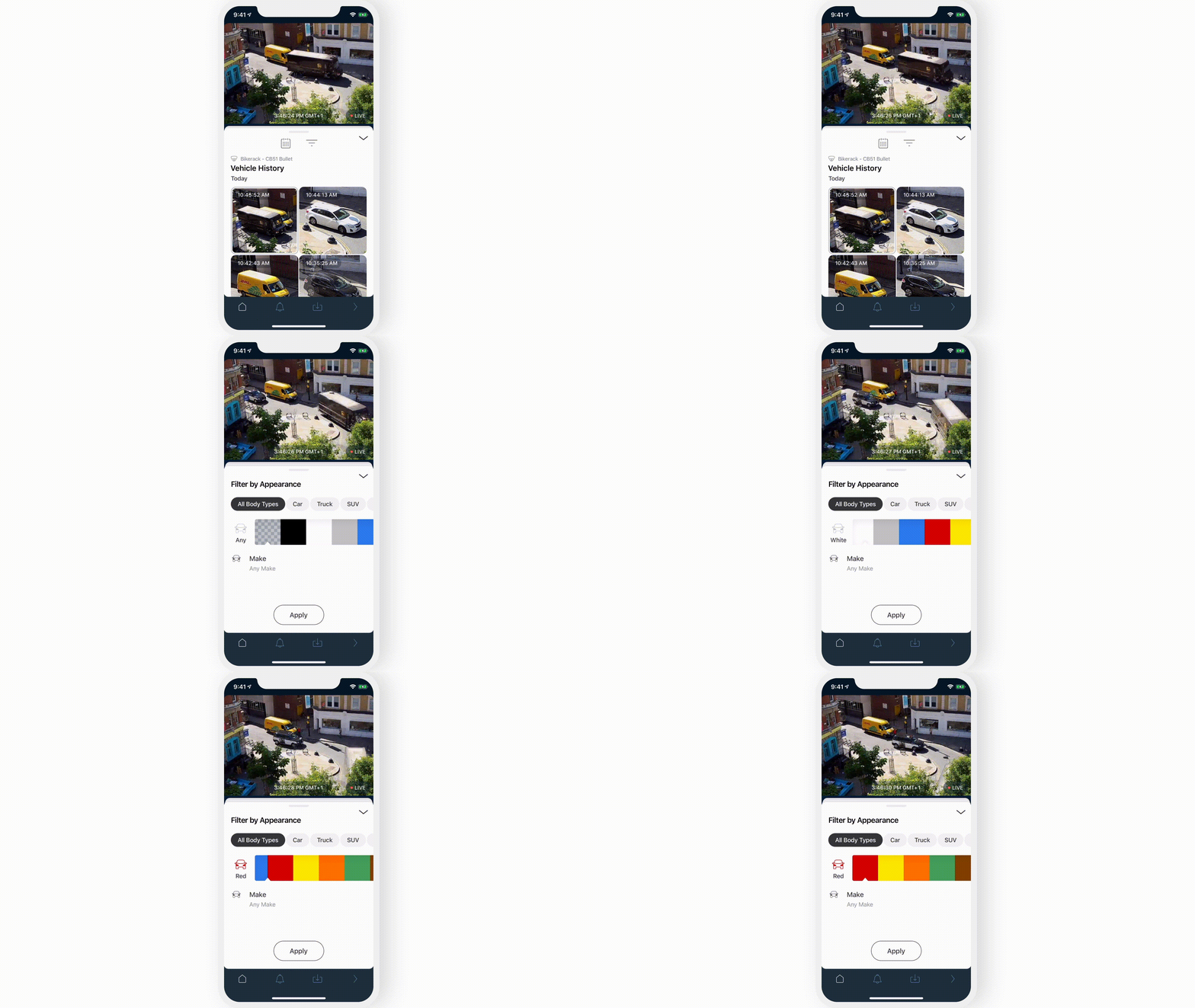
“Being able to search very quickly has saved so much time. It really has. My team absolutely loves it.”
In the past, the team has also used People of Interest alerts to flag banned individuals at access-control barriers. After a few successful detections, repeat attempts quickly dropped off.
Insurance & Liability: Clear Evidence When It Counts
Motor-related incidents are common across the college’s large estate. In one instance, a truck hit the main gates, caused significant damage, and drove off.
Using Verkada, the team:
Retrieved complete footage of the incident
Identified the vehicle
Shared clips with insurers and police
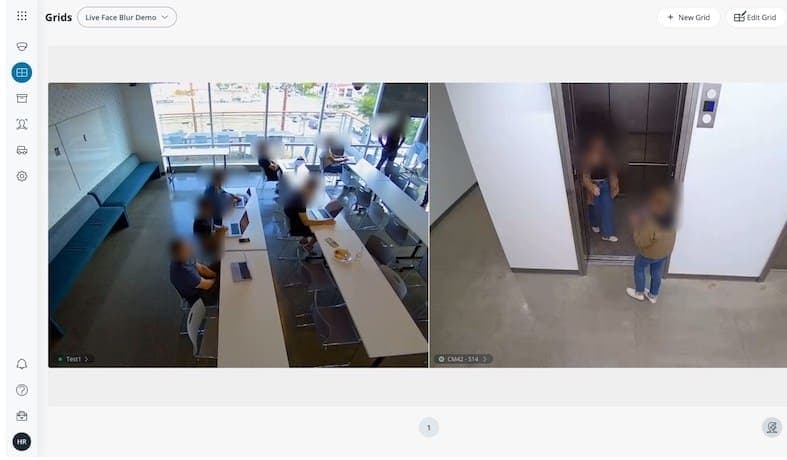
When footage is shared externally — for example, for insurance claims — the team can apply face blur to protect bystanders and support privacy requirements, while still providing clear evidence of what happened.
Preparing for Perimeter Awareness and Safety Analytics
At one campus with a history of trespass, the Estates team is investing in new perimeter fencing and exploring how Verkada’s newer AI capabilities can support them.
Today, Chris already uses tools such as line-crossing detection to speed up reviews. Looking ahead, he sees strong potential in:
Fence-climbing detection to highlight unauthorised access attempts
Slip-and-fall detection in busy entranceways to support incident response and reporting
This approach gives the team stronger situational awareness across wide, distributed grounds — without needing a dedicated control room.

Looking Ahead: A More Unified Security Platform
Chris is watching Verkada’s expanding platform closely. Areas of interest include:
Intruder alarms unified with video, once the latest system is available in the UK
Horn speakers and talk-down for real-time deterrence
Deeper integration of access-related activity and video to further streamline investigations
For now, the priority remains phasing out legacy CCTV and continuing to standardise on Verkada as budget allows.
“Personally, it’s a no-brainer. Once you look at the ten-year cost and the time it saves us, sticking with Verkada going forwards just makes sense.”