A bullet camera is a cylindrical, elongated device designed for long-distance outdoor viewing with obvious presence and a narrower field of view. A dome camera is a spherical or low-profile unit with a wider field of view, discrete appearance, and superior vandal resistance. Each form factor excels in different applications: bullets for perimeter monitoring and outdoor monitoring, domes for covert indoor observation and vandal-prone locations. Selecting between them depends on your coverage area, visibility requirements, and environmental conditions.
What is the difference between a bullet camera and a dome camera?
Bullet cameras are distinctive cylindrical devices (2-8 inches) with concentrated light collection creating exceptional long-distance viewing for faces, license plates, and details. Their obvious appearance signals active monitoring, discouraging criminal activity — ideal for deterrence in parking lots and building perimeters. Most are weatherproof (IP66/IP67) outdoor devices.
Dome cameras mount in protective dome-shaped housings concealing internal mechanisms. Observers usually cannot determine direction visually, creating ambiguity ideal for covert monitoring in retail, offices, and lobbies. The protective housing provides exceptional vandal resistance — completely enclosed design helps prevent redirection, lens coverage, or internal damage. They can typically work in indoor and outdoor installations with wider field-of-view lenses.
Bullet vs. dome camera: side-by-side comparison
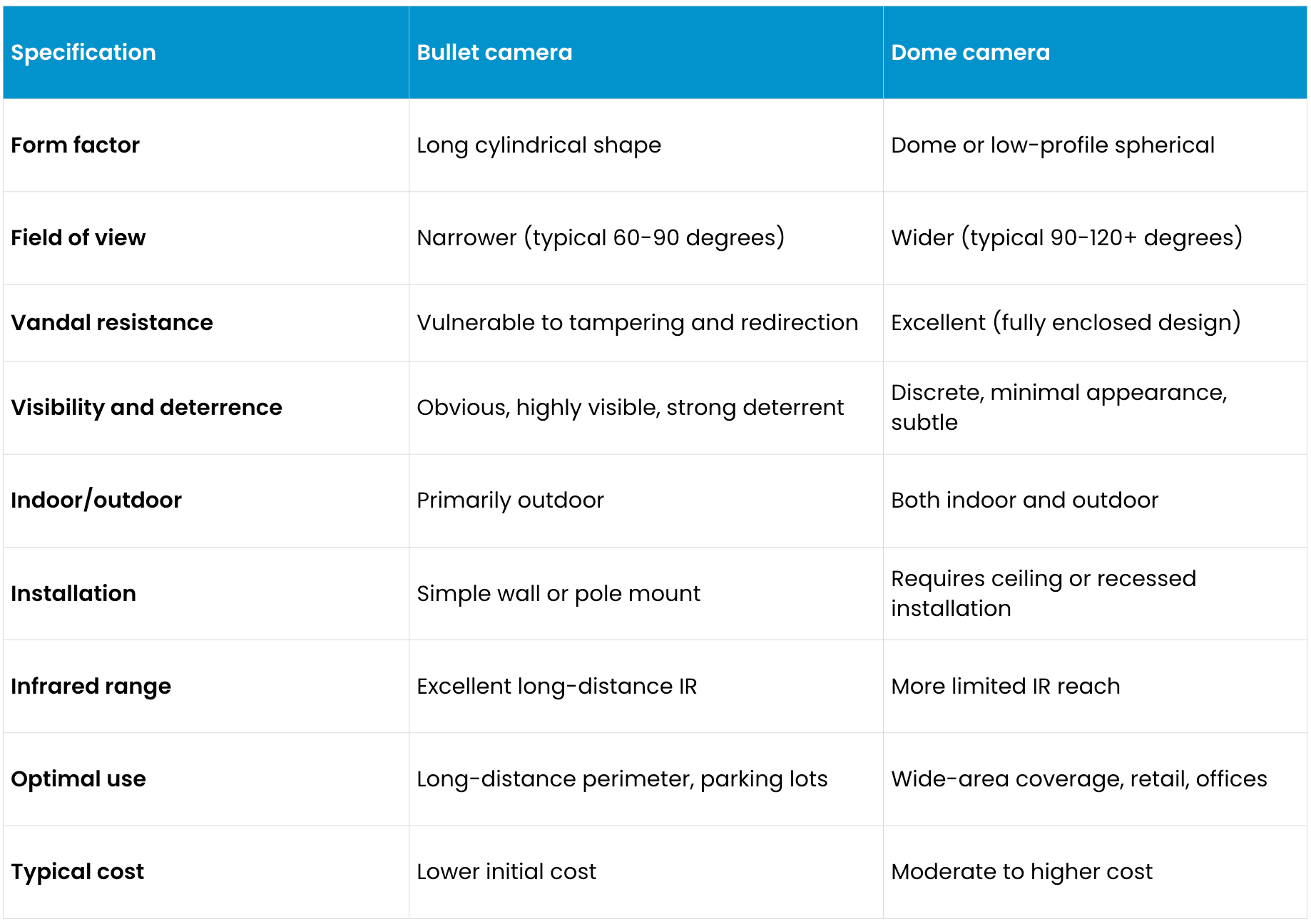
Key differences
Field of view: Bullets sacrifice field of view for long-distance clarity with narrow lenses ideal for specific zones. Domes provide broader coverage for entire areas, requiring fewer units but with reduced zoom and distance detail.
Vandal resistance: Domes' protective enclosures help prevent tampering — no external adjustment points, preventing redirection or lens damage. Bullets extend outward, allowing trivial redirection and tampering.
Deterrence vs. covert: Bullets can function as visible deterrents signaling active monitoring for parking lots and commercial areas. Domes further enable covert monitoring by concealing direction.
Installation: Bullets generally require simple external wall/pole mounts — drilling two holes, securing brackets in minutes with low labor costs. Domes tend to require complex ceiling mounting in recessed housings with careful placement and custom brackets, which can cost significantly more but justified by improved durability and covert function.
When should you choose a bullet camera?
Bullet cameras excel in these scenarios:
Outdoor perimeter security: Building edges, parking lots, and access roads benefit from bullets' long-distance capability. Mount them high and point outward to capture detail across expansive areas.
Parking lot and driveway monitoring: License plate recognition and vehicle identification require the long optical distance bullets provide. A bullet camera 40 feet high can capture clear license plate detail 150 feet away.
Visible deterrence: Any location where you want criminal activity visibly discouraged — retail storefronts, gas stations, ATM areas — benefits from the obvious deterrent effect bullet cameras provide.
Weather-exposed mounting: Bullet cameras handle extreme weather better than domes. If mounting on exposed poles or high building edges subject to salt spray or temperature swings, bullets survive better.
Long-distance monitoring: Viewing across large open areas (airfields, storage yards, construction sites) where the area of interest is distant from the camera position requires bullets' concentrated optical design.
When should you choose a dome camera?
Dome cameras are optimal for these applications:
Indoor retail and office environments: The discrete appearance and wide field of view make domes perfect for storefronts, shopping areas, and office lobbies where aesthetic impact matters.
Vandal-prone areas: Schools, public transportation, parking garages, and other high-risk locations benefit from domes' inherent tampering resistance. The enclosed design helps prevent redirection or lens obstruction.
Covert monitoring: Retail loss prevention, employee conduct monitoring, and other applications requiring discreet observation benefit from domes' ability to conceal the camera's direction.
Ceiling mounting: If your security design calls for overhead coverage, domes integrate seamlessly into ceiling infrastructure.
Aesthetically sensitive locations: Museums, hotels, fine dining, and high-end retail locations use domes to maintain visual appeal while providing monitoring.
Wide-area coverage: Single domes covering entire warehouse sections, manufacturing floors, or large lobbies reduce overall camera count compared to narrow-field bullets.
Hybrid deployments
Most professional systems mix both types strategically. Use bullets for specific perimeter or long-distance monitoring, domes for wide-area indoor coverage and vandal-prone locations. A retail building might use domes inside for covert loss prevention and bullets outside monitoring parking lots. Modern NVRs handle mixed types seamlessly through single interfaces.
Frequently asked questions
Can dome cameras be used outdoors?
Many are rated IP66/IP67 and work well in covered areas or non-harsh environments. Open-air mounting exposes domes to weather damage and reduces protective advantage. For harsh outdoor conditions, bullets are more suitable.
How do I know if my dome camera is detecting motion?
Dome cameras can include motion sensors and smart detection identical to bullets. Enable motion detection alerts in video management software for activity notifications.
Can a bullet camera see through rain or fog?
Both can struggle in severe rain or dense fog. Rain droplets can degrade quality; fog can scatter light reducing contrast. Neither type solves poor weather — all optical monitoring is weather-limited.
This content is provided for informational and educational purposes only on an "as-is" basis. The views expressed herein may include speculative claims, represent the opinions of the authors, and do not necessarily reflect the official product specifications or technical capabilities of Verkada products. Verkada makes no guarantees regarding the accuracy, completeness, or timeliness of this content, which may not reflect current legal or industry developments. This post does not constitute legal, technical, or professional advice; any reliance you place on this information is at your own risk. Verkada hereby disclaims all liability for any loss or damage arising from reliance on this content. Readers are solely responsible for their own regulatory compliance and should consult with qualified specialists regarding their specific security and legal requirements.
