A PTZ (pan-tilt-zoom) camera is an IP security camera with motorized mechanical controls that enable it to move horizontally (pan), vertically (tilt), and optionally magnify distant objects (zoom). PTZ cameras are usually remotely controlled via joystick, mobile app, or software interface, allowing operators to adjust coverage area dynamically without repositioning physical hardware.
What is a PTZ camera and how does it work?
PTZ cameras extend security camera capabilities through motorized movement and zoom functions. Pan rotates horizontally to sweep wide scenes, tilt moves vertically for monitoring tall structures or tracking vertical movement. Zoom magnifies distant objects with either optical zoom (mechanical lens adjustment for quality preservation) or digital zoom (cropping and enlarging for extended magnification).
PTZ vs. ePTZ: what's the difference?
PTZ cameras feature physical motors for real-time mechanical movement with smooth responsiveness and superior precision. ePTZ (electronic pan-tilt-zoom) uses software to simulate movement on fixed cameras without motors, providing cost savings and eliminating maintenance but lacking real-time responsiveness and reducing image quality through digital magnification. PTZ suits dynamic monitoring requiring responsive tracking; ePTZ works for static coverage areas.
What are the different types of PTZ cameras?
PTZ cameras come in various connectivity and outdoor capability configurations. Selecting the appropriate type depends on installation environment, power availability, and integration requirements.
PTZ types
PoE PTZ IP cameras receive power and connectivity through a single Ethernet cable, ideal for new deployments. They generally integrate with NVRs and offer 2K to 4K resolution with 20x to 50x+ optical zoom. WiFi PTZ cameras offer wireless flexibility but with latency and battery limitations. Analog PTZ cameras are legacy technology with lower resolution, rarely specified for new installations. Outdoor PTZ cameras often feature IP66/IK10 weatherproofing, heating/cooling mechanisms, and advanced features like thermal imaging with 50x-100x+ zoom for long-distance identification.
Where are PTZ cameras used?
PTZ cameras excel in parking lots, warehouses, and event venues where operators need to track activity across expansive areas. Single PTZ units can cover large parking sections with zoom capability for license plate identification and vehicle details. In warehouses, they monitor package movement and inventory across entire sections. At stadiums and event venues, operators can use PTZs to track suspicious individuals and crowd movement from central control stations.
PTZ vs. fixed vs. fisheye: which camera type should you choose?
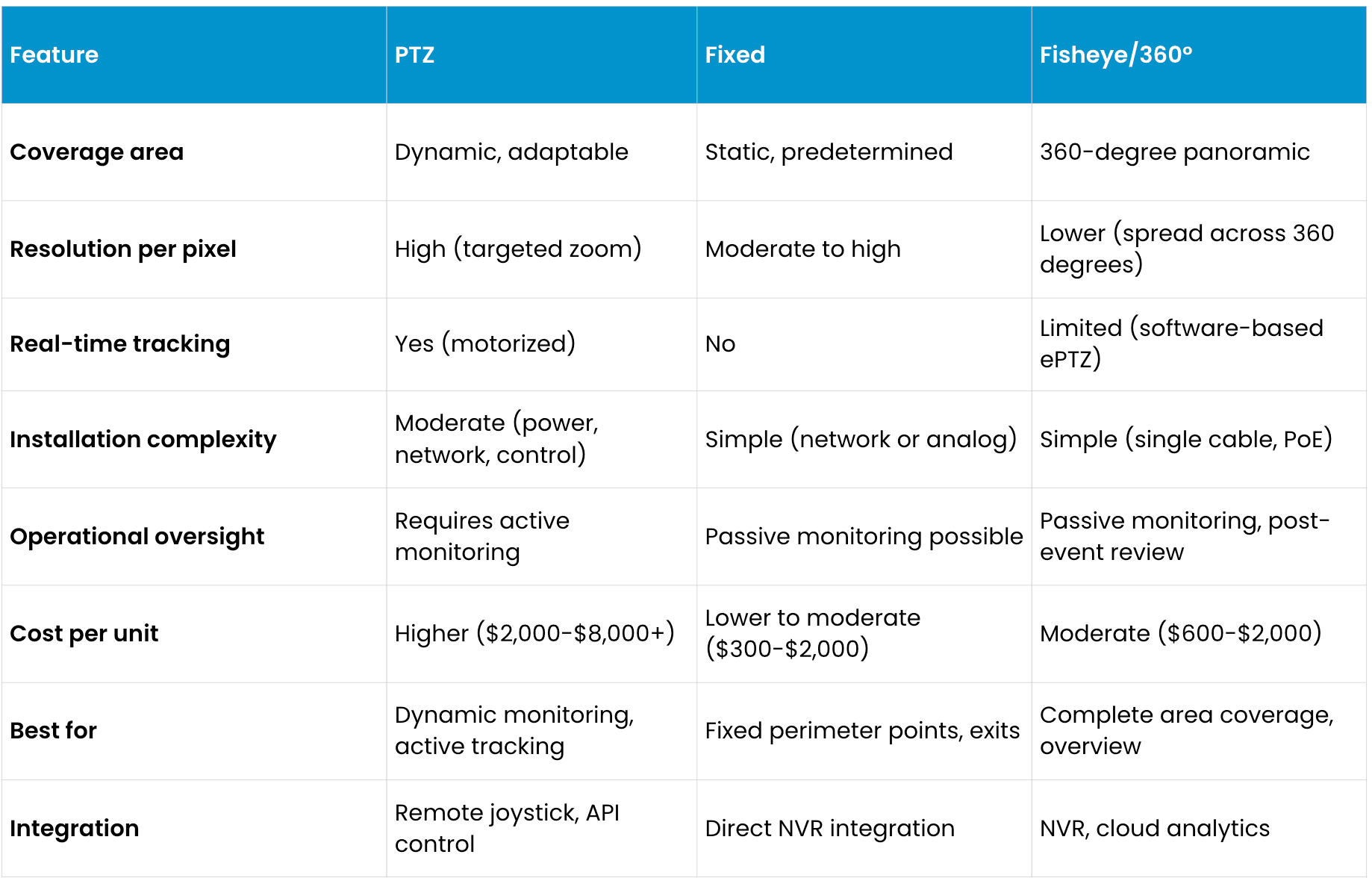
PTZ cameras justify investment when monitoring requires active operator engagement or covering large areas from single positions. Fixed cameras suit static perimeters, entrances, exits, and predetermined monitoring points. Fisheye cameras (with 360-degree or very wide field of view) excel in providing complete area overview in smaller spaces.
Many organizations use hybrid approaches, combining PTZ cameras for dynamic monitoring with fixed cameras for stationary perimeter points and fisheye cameras for comprehensive area coverage.
What to consider before buying a PTZ camera
Determine whether your security team needs active operator control or automated tracking. Automated systems often reduce overhead but cost more up front. Evaluate zoom requirements based on distance and identification needs — license plate recognition typically requires 4K and 20x-30x minimum zoom. For outdoor PTZ cameras, verify IP66+ and IK10+ ratings, with integrated heating/cooling and wiper mechanisms for extreme climates.
Frequently asked questions about PTZ cameras
Can PTZ cameras work with NVR systems?
Yes, PTZ IP cameras are fully compatible with NVR systems, transmitting video and control signals over Ethernet. Control is available through NVR software interfaces or dedicated PTZ controllers.
What is the difference between 20x and 30x optical zoom?
20x zoom magnifies subjects 20 times; 30x magnifies 30 times. License plate recognition at 30 feet requires 20x-30x zoom. Very long-distance identification beyond 100 feet requires 50x+ zoom.
Do PTZ cameras work at night?
Standard PTZ cameras require adequate lighting. Infrared PTZ cameras with thermal sensors enable night vision without much visible light. Some models integrate both visible and thermal imaging.
Can a single PTZ replace multiple fixed cameras?
A single PTZ can often replace two to four fixed cameras but has limitations. It cannot capture simultaneous events at different locations. Organizations typically combine PTZ cameras with fixed cameras for critical static points to maximize coverage.
This content is provided for informational and educational purposes only on an "as-is" basis. The views expressed herein may include speculative claims, represent the opinions of the authors, and do not necessarily reflect the official product specifications or technical capabilities of Verkada products. Verkada makes no guarantees regarding the accuracy, completeness, or timeliness of this content, which may not reflect current legal or industry developments. This post does not constitute legal, technical, or professional advice; any reliance you place on this information is at your own risk. Verkada hereby disclaims all liability for any loss or damage arising from reliance on this content. Readers are solely responsible for their own regulatory compliance and should consult with qualified specialists regarding their specific security and legal requirements.
