Wired alarm systems transmit detection signals through dedicated cables connecting sensors to a central control panel, while wireless systems transmit signals via radio frequency (RF) communication without physical cabling. Wired systems are often recognized for their reliability and resistance to signal interference but typically involve more installation effort and upfront cost. Wireless systems may offer flexibility and simpler installation but tend to rely on battery power for individual sensors and can be susceptible to RF interference. The choice between approaches depends on facility layout, long-term occupancy plans, reliability requirements, and budget constraints.
What is the difference between wired and wireless alarm systems?
Both approaches tend to accomplish identical functions — detecting intrusions, environmental hazards, or unauthorized access and alerting authorities or facility staff. The distinction lies in how detection information travels from sensors to central processing.
How wired alarm systems work
Wired systems contain physical cables connecting every sensor (door contact, motion detector, glass break sensor) to a central control panel via dedicated wiring runs. The control panel continuously monitors electrical continuity on each circuit. When a sensor detects an event, it closes or opens a switch that changes electrical state on the circuit. The panel detects this state change and processes it according to programmed rules.
Supervision features verify that wiring remains intact and connected. Open-circuit faults can be detected immediately if wiring is damaged, designed to minimize false alerts from damaged wiring.
All power comes from the central panel, which maintains battery backup ensuring operation during power outages. Individual sensors contain no batteries, simplifying maintenance and eliminating battery replacement requirements.
How wireless alarm systems work
Wireless systems eliminate physical sensor-to-panel connections. Each wireless sensor contains a battery-powered transmitter broadcasting RF signals when detecting events. The central panel includes a receiver that captures these signals and processes them.
Individual sensors maintain autonomy — each contains its own power supply, processor, and transmitter. Sensors communicate through radio frequency channels specific to the system manufacturer. Each sensor typically broadcasts periodically (heartbeat signals) to allow the panel to monitor the sensor’s status.
Battery replacement is typically required every 1 to 3 years depending on sensor activity levels.
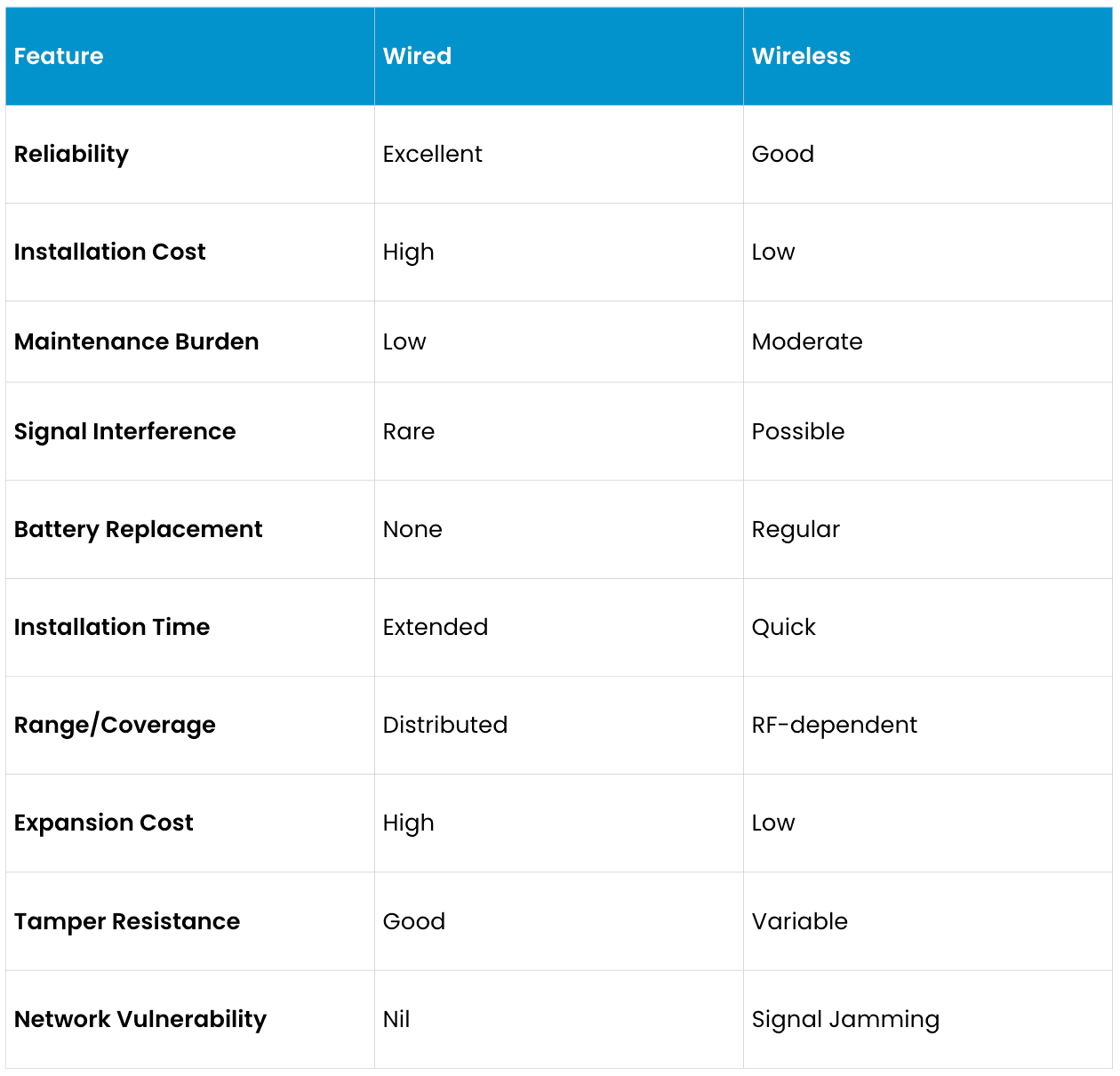
Wired vs. wireless alarm systems: side-by-side comparison
Reliability and signal interference
Wired systems are generally less susceptible to interference. Physical connections are designed to maintain communication across a variety of building environments.
Wireless systems depend on RF transmission which may be subject to multiple interference sources. Cordless phones, WiFi routers, microwave ovens, and other RF devices operating on overlapping frequencies may disrupt sensor communication. Building materials including metal studs and concrete may reduce RF penetration.
Professional wireless system design accounts for interference through site surveys, proper antenna placement, and frequency hopping algorithms. Well-designed wireless systems incorporate features to mitigate potential interference.
Installation complexity and cost
Wired system installation often involves routing cables through walls, ceilings, and conduit systems to every sensor location. Total installation costs vary widely based on labor rates, local building codes, and the complexity of the facility's architecture.
Wireless installation, on the other hand, usually involves placing sensors at detection points and programming them into the panel..
Maintenance and battery replacement
Wired systems often require minimal maintenance once installed
Wireless systems may require ongoing sensor battery replacement. Over time, cumulative battery costs and replacement labor could approach original installation costs.
When should you choose wired or wireless?
Choose wired systems when:
The organization prioritizes a long-term, fixed infrastructure.
Enhanced physical tamper-resistance is a key requirement.
Choose wireless systems when:
Temporary installations or seasonal facilities with uncertain long-term occupancy
Small facilities with fewer than 10 detection zones
Frequent reconfiguration of sensor locations needed
Speed of deployment and minimal structural impact are priorities
Can you combine wired and wireless alarm systems?
Hybrid systems combining wired and wireless components can optimize advantages of both approaches. Central panels can support both wired zones and wireless receivers, enabling flexible system design. Examples include wired perimeter security with wireless interior motion detection, or wired entry point sensors with wireless environmental sensors.
Hybrid systems may require compatible control panels and proper RF receiver placement within the facility. System design may then become more complex than purely wired or purely wireless approaches, often requiring professional planning to optimize coverage and avoid interference.
Frequently asked questions
How often must I replace wireless sensor batteries?
Battery life depends on sensor type and activity levels. Monitor panel battery status notifications and replace batteries proactively.
What interference sources affect wireless alarm systems?
Cordless telephones, WiFi routers, baby monitors, cellular boosters, and microwave ovens may transmit on frequencies overlapping alarm system frequencies. Industrial facilities with high-power electrical equipment may experience substantial RF noise. Professional site surveys can help identify interference sources at a specific site.
Can wired alarm systems fail?
Power supply failures, wiring damage, and sensor malfunctions can disable wired systems. Battery backup systems can help ensure operation during power outages.
Can I upgrade a wired system to add wireless sensors?
Control panels from major manufacturers typically support both wired and wireless zones. Adding wireless sensors requires purchasing wireless receivers compatible with your control panel.
How long do wired alarm system cables last?
Quality installation may last for many years without degradation. Physical damage from construction, rodents, or environmental factors may require replacement.
What's the lifespan of alarm system control panels?
Quality control panels typically operate for many years with proper maintenance.
This content is provided for informational and educational purposes only on an "as-is" basis. The views expressed herein may include speculative claims, represent the opinions of the authors, and do not necessarily reflect the official product specifications or technical capabilities of Verkada products. Verkada makes no guarantees regarding the accuracy, completeness, or timeliness of this content, which may not reflect current legal or industry developments. This post does not constitute legal, technical, or professional advice; any reliance you place on this information is at your own risk. Verkada hereby disclaims all liability for any loss or damage arising from reliance on this content. Readers are solely responsible for their own regulatory compliance and should consult with qualified specialists regarding their specific security and legal requirements.
