Wired vs. Wireless vs. WiFi Security Cameras: Pros, Cons, and Key Differences
Wired security cameras transmit video and receive power through physical cables (coaxial for analog or Ethernet for IP), while wireless cameras communicate via radio frequencies without permanent cables. WiFi cameras are a subset of wireless cameras that specifically use standard WiFi networks. Wired cameras offer reliability and consistent power; wireless cameras provide installation flexibility and placement freedom.
What is the difference between wired, wireless, and WiFi security cameras?
Wired cameras use permanent physical connections for video transmission and power. Traditional analog wired cameras require separate coaxial and power cables, while modern IP cameras use Ethernet with Power over Ethernet (PoE) combining both functions. Wired systems offer continuous power and guaranteed connectivity without signal degradation.
Wireless cameras transmit via radio frequencies without permanent cables, typically powered by rechargeable batteries or optional solar panels. They provide installation flexibility but require regular charging or replacement and may experience interference and range limitations.
WiFi cameras specifically use standard WiFi networks (2.4 GHz or 5 GHz), depending on facility WiFi quality. Non-WiFi wireless cameras use proprietary frequencies through dedicated base stations, potentially offering better range and reliability. WiFi cameras suit consumer/small business applications, while enterprises may prefer proprietary wireless systems.
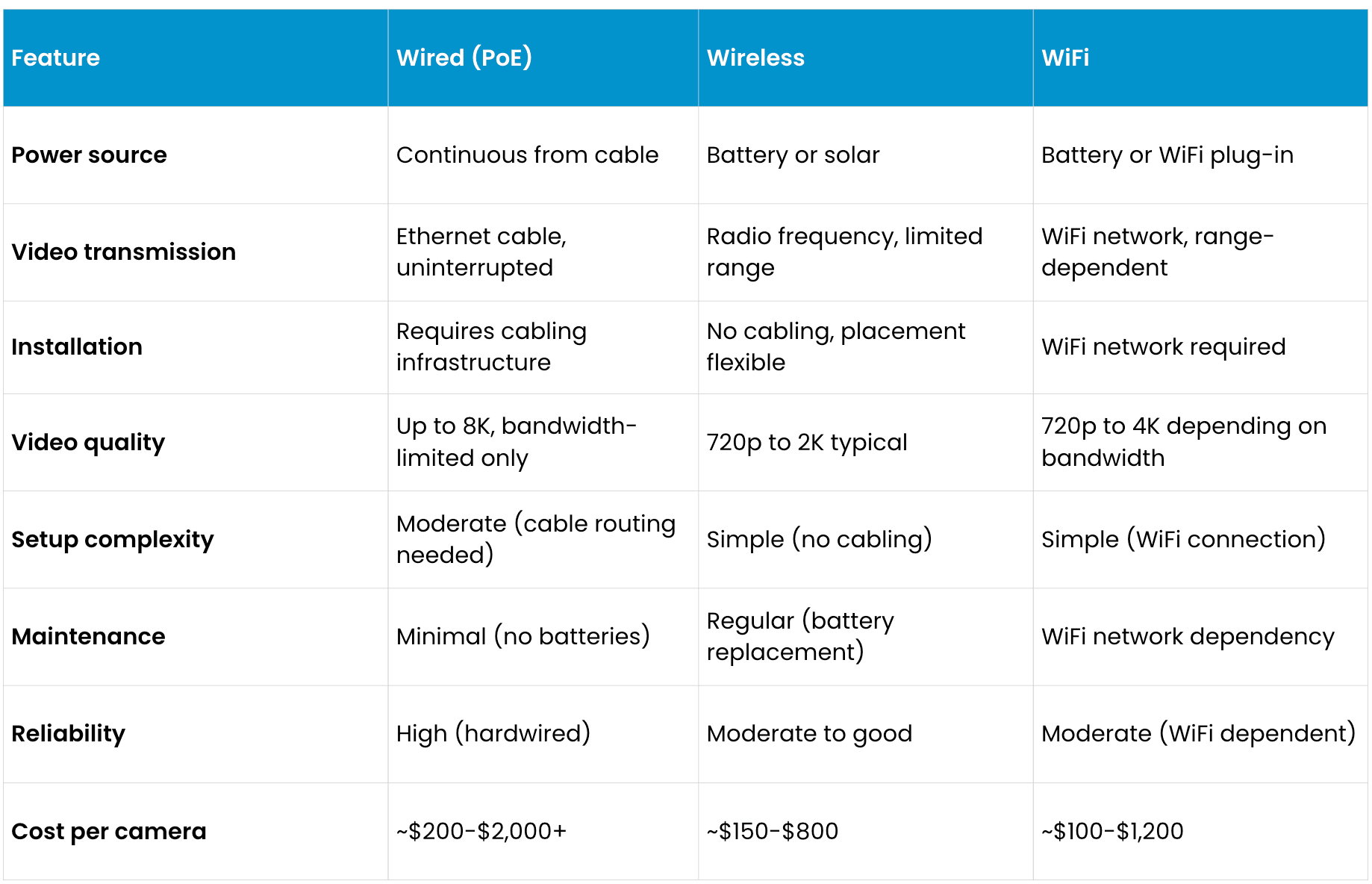
Wired vs. wireless security cameras: side-by-side comparison
Key differences
Wired cameras can offer superior reliability through permanent connections often immune to interference and signal degradation, supporting 4K-8K+ resolutions without bandwidth constraints. Wireless cameras depend on signal strength (limited by walls, interference, distance) and bandwidth (typically 720p-2K), but offer rapid deployment and flexibility. PoE wired systems require one-time labor-intensive installation with minimal maintenance. Wireless systems are straightforward to install but require ongoing battery management. Initial costs tend to favor wireless, but total cost of ownership may favor wired over time. PoE provides continuous power; batteries require regular charging (~2-6 months); solar options reduce charging but depend on sunlight. Wired Ethernet systems with encrypted protocols offer superior security; wireless systems transmit through radio frequencies vulnerable to interception and depend on network password strength.
When to choose wired vs. wireless
Choose wired systems for permanent installations, enterprise deployments, existing network infrastructure, 4K+ resolution requirements, remote access, and critical asset monitoring. Wired infrastructure provides superior reliability despite higher installation costs.
Choose wireless systems for temporary installations, rental properties, impractical cabling situations, rapid deployment needs, low-traffic areas without electrical power, and small businesses without existing infrastructure. Wireless offers flexibility and quick deployment despite battery management overhead.
Hybrid systems
Hybrid systems combining wired and wireless cameras are optimal. Organizations deploy wired cameras for permanent, critical locations and wireless for flexible, secondary areas. Modern NVRs and cloud platforms support mixed types with single management interfaces.
Frequently asked questions
What is the maximum distance for wired camera cables?
Ethernet cables transmit data up to 328 feet (100 meters) without signal degradation. Beyond this requires network switches or repeaters. Coaxial cables limit to approximately 300 feet before quality degrades. Practical installations typically use cables under 200 feet for performance margins.
How often do wireless camera batteries need replacing?
Battery life depends on usage, resolution, and environmental factors. Most cameras operate 2-6 months per charge. High-resolution, constantly-recording cameras deplete faster. Solar-powered models operate indefinitely in sunlight but depend on adequate sun exposure. You can also choose rechargeable wireless cameras, which require a recharge every 2-3 months.
Can wired cameras work if power fails?
PoE cameras fail during power outages unless backed by uninterruptible power supplies (UPS). Battery-powered wireless cameras continue operating, providing emergency monitoring capability.
What is the best camera for poor WiFi?
Wired PoE cameras are ideal for poor WiFi environments, not depending on signal strength. Professional wireless systems using dedicated frequencies may perform better than consumer WiFi cameras. WiFi upgrades improve WiFi camera performance.
This content is provided for informational and educational purposes only on an "as-is" basis. The views expressed herein may include speculative claims, represent the opinions of the authors, and do not necessarily reflect the official product specifications or technical capabilities of Verkada products. Verkada makes no guarantees regarding the accuracy, completeness, or timeliness of this content, which may not reflect current legal or industry developments. This post does not constitute legal, technical, or professional advice; any reliance you place on this information is at your own risk. Verkada hereby disclaims all liability for any loss or damage arising from reliance on this content. Readers are solely responsible for their own regulatory compliance and should consult with qualified specialists regarding their specific security and legal requirements.
