
At a glance
~1,220 students across Prep to Year 12, including day and boarding students
~78 cameras deployed as part of the initial rollout
Hours → minutes to find relevant footage
Video security, access control, intercoms, and air quality sensors managed in one platform
Authorized self-service reduces reliance on IT for routine investigations
A long-term campus standard, now extending into a major new building
Supporting a complex school environment with a lean IT team
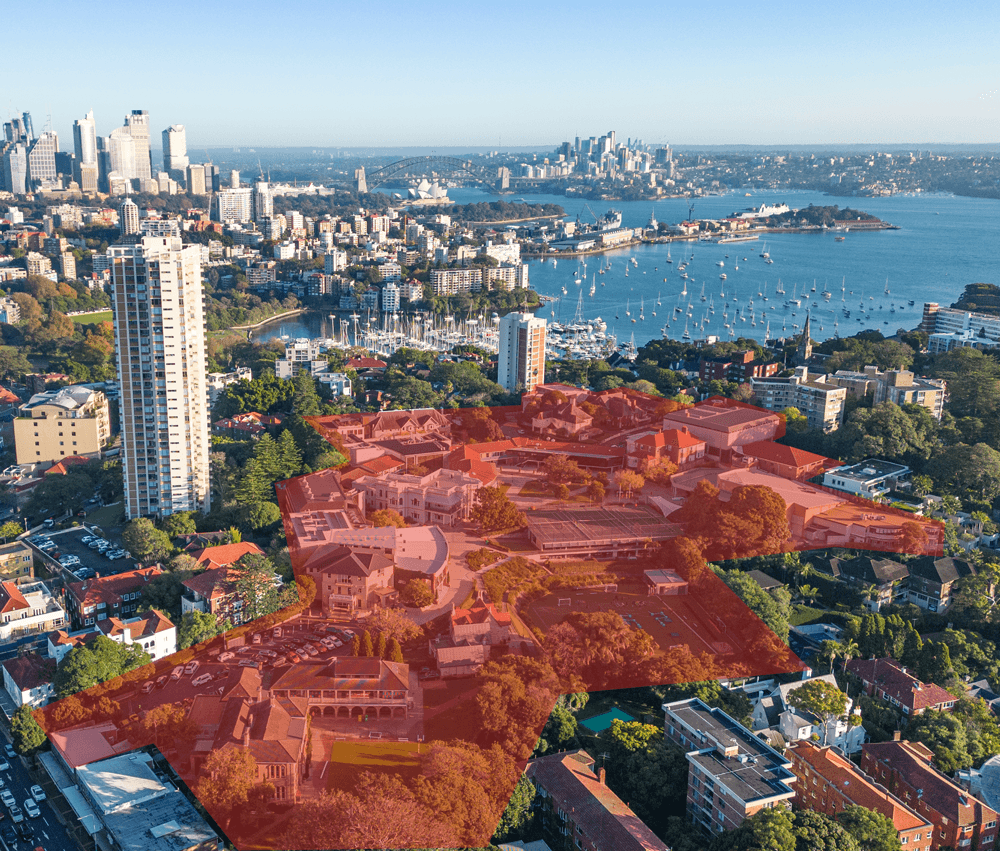
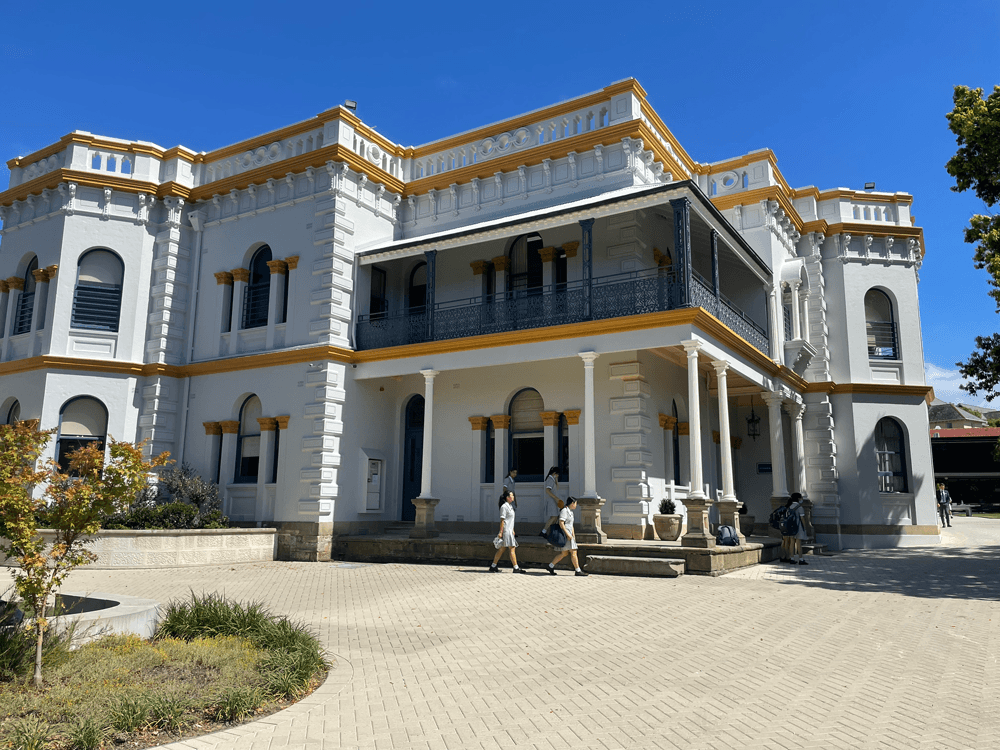
Located on a single campus in Darling Point, Sydney, Ascham School is an independent girls’ school serving approximately 1,220 students from Prep through Year 12, including both day and boarding students. The school has approximately 350 full-time-equivalent staff and around 600 individual staff members when coaches and other roles are included — all supported by a relatively lean ICT team.
For Director of ICT Georgina Liberale, who previously worked in higher education, the challenge is familiar: the technology environment may be smaller, but it is no less complex.
“From a technology standpoint, a school needs many of the same layers as a university, just at a smaller scale,” she says. “You still need the same breadth of technology — and the people to manage it.”
Physical security is part of that environment. Facilities and campus security handle day-to-day operations, while ICT oversees user access, configuration, governance, and integrations.
“A campus is much more fluid than a conventional office,” Liberale says. “We have students from Prep through Year 12, alongside parents, teachers, coaches, contractors and community groups — all moving through campus with different needs.”
That means the school’s security systems need to support everything from everyday access and boarding operations to student wellbeing, out-of-hours activity, and incident investigations — without putting more work on ICT.
Moving beyond a system that depended on IT
Before Verkada, Ascham relied on legacy on-premises video security and access control systems. The biggest problem was usability.
“Finding and retrieving footage wasn’t straightforward,” Liberale says. “Only two people really knew how to do it, so anytime someone needed footage, IT had to get involved.”
The people closest to an incident often knew exactly what they were looking for, but still had to pass the request to ICT, wait for someone with the right technical knowledge, and have that person find and export the footage on their behalf.
Ascham first trialled Verkada before the COVID-19 pandemic, well before the school was ready to replace its existing environment.
“I couldn’t tell you how many vendor cold calls and emails I get, and most of them I don’t really look at,” Liberale says. “But Verkada, I looked at it and went, ‘Oh, that looks interesting.’”
The initial proof of concept gave the ICT team a glimpse of what a different approach could look like.
“What stood out was the remote access and the ease of use,” she says. “The ability to search really was a game changer.”
When Ascham was ready to go to market around 2023, the school ran a competitive tender and specifically asked for Verkada to be included. Ascham ultimately selected the platform and, working with security partner Secure People, deployed approximately 78 cameras in its initial rollout.
“My team report back to me on things that are working — are we on time, are we on schedule — and it rolled out fairly seamlessly,” Liberale says.
Secure People has remained involved beyond the initial implementation. Liberale says she particularly valued that there was no “hard handoff” after the sale, and recalls the team going “above and beyond” when Ascham needed support outside regular hours.
“That’s the kind of partnership that we wanted.”
From hours to minutes — and IT tickets to self-service
Once the system was in place, the biggest change was not simply how quickly footage could be found. It was who could find it.
Today, authorized staff can investigate many incidents themselves rather than routing every request through ICT. Ascham’s Deputy Head, for example, can review historical footage and save what she needs directly.
“She knows exactly what she’s after because she’s across the incident,” Liberale says. “That saves so much time, both for her and for us.”
The difference in investigation time can be substantial.
“In the past it might have taken four hours to find something because you’ve actually got to trawl through the footage itself,” she says. “What took hours now takes minutes.”
For a lean ICT team, that means routine investigation work no longer automatically becomes an IT task.
“Work that IT used to do is now self-service with the authorized users.”
That same simplicity extends beyond video. Ascham now manages video security, access control, intercoms, and air quality sensors through Verkada rather than treating each physical security function as a separate environment.
“The main benefit is that we don’t have to think about each physical security function as a separate system,” Liberale says. “Authorized staff can work through the interface and move between the cameras and doors and intercoms without needing to learn the different platforms.”
For boarding operations, that flexibility is particularly useful. Boarding-house leaders can access cameras relevant to their areas, while staff can use the mobile app for access control. If support is needed over the weekend, ICT can help remotely.
“The remote access is good if boarding, who operate obviously 24/7, need support on the weekend,” Liberale says. “We can remote in, and that’s a lot easier to support them when they need it.”
Broadening access without losing control
Making a security system easier for people to use raises an equally important question for Ascham: how do you broaden access without broadening it too far?
At the school, self-service does not mean open access. The roles permitted to use the platform are defined in policy and governed at the executive level.
“Everyone that has access and the ability to do what we’ve outlined, their roles are specified in the policy,” Liberale says. “It’s not just that we give access to whoever says they want it. The governance around that is verified by the executive.”
That distinction is especially important in an environment where security footage may involve students.
“A security system is sensitive by nature,” she says. “You’ve got to have the governance in place.”
Role-based permissions and audit logs give Ascham control over what different users can access and visibility into activity within the system.
“The permissions are assigned, they’re controlled by role, and it gives us visibility of who’s doing what and when.”
The controls extend beyond video access. Ascham uses single sign-on and multi-factor authentication, which Liberale says are important to the school’s wider security posture and cyber-insurance requirements.
Sharing footage is more controlled as well. Instead of handing someone a video file with no way to manage it afterward, Ascham can provide restricted, time-limited access.
“Before, you provided someone with a video — and that’s it, they’ve got it permanently,” Liberale says. With Verkada, “we can restrict it so that they’ve only got access for a certain amount of time, and unless we allow it, they can't download or share it.”
Ascham’s use of Air Quality Sensors reinforces the same privacy-conscious approach. The school has deployed sensors near girls’ bathrooms for vape detection, providing another source of safety information around sensitive spaces where cameras would not be appropriate.
Longer term, Liberale sees the potential to bring more functions onto the same platform as existing point solutions reach the end of their useful life.
“What I liked about Verkada is that it gave us the option to be able to do that in future, rather than having to have all the different point solutions.”
For Ascham, the result is a model where the right people can get to security information faster, while ICT retains clear control over who has access and how that information is handled.
From one deployment to the campus standard
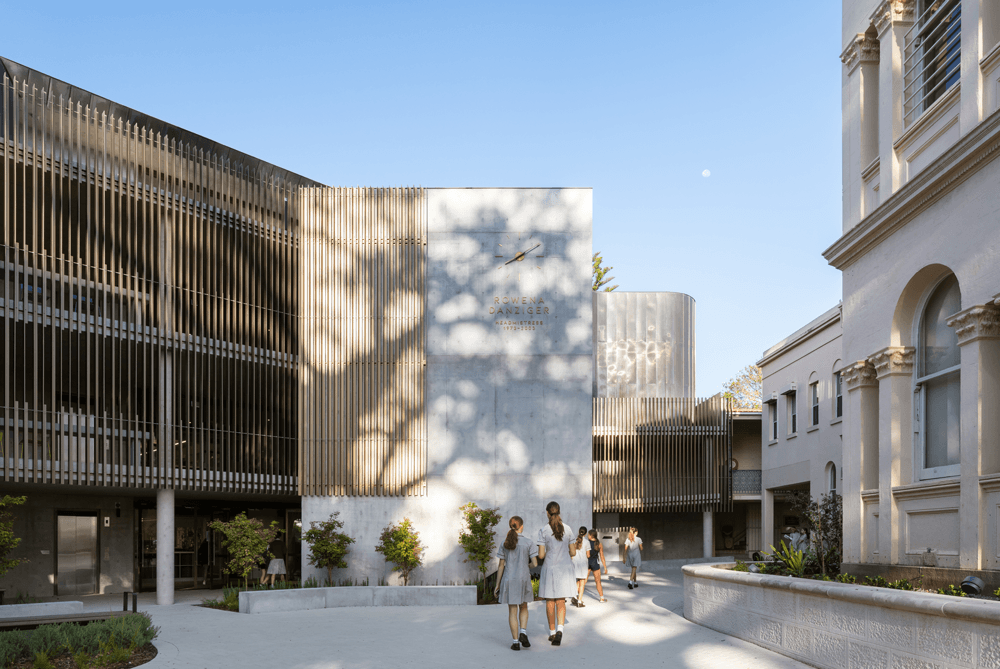
As Ascham prepares to bring a major new building online, the school is extending the same Verkada environment rather than introducing another security system. Additional cameras will simply join the existing deployment, with Verkada now established as the standard for new buildings and renovations.
“Verkada has probably been the most painless part of the build,” Liberale says. “It’s one less thing to worry about.”
Standardizing on a platform the school already knows also makes future expansion simpler. Staff do not have to learn another system, while ICT can apply the same approach to management, permissions, and governance as new spaces come online.
That long-term consistency was important from the outset. Ascham was not looking at physical security as a short-term technology purchase; Liberale sees Verkada as “at least a 10-year investment.”
With that timeframe in mind, total cost of ownership formed an important part of the original evaluation. When Ascham compared its options, Liberale recalls the overall cost being similar, but Verkada offered a stronger long-term path — allowing the school to extend the same platform into new buildings and add new security and safety capabilities over time without introducing more standalone systems.
“It was a similar price point, but it gave us a lot more room to grow,” she says. “It’s definitely a good fit for the school.”
Build the business case around outcomes
For other school technology leaders considering a similar investment, Liberale recommends starting with the problem the school is trying to solve rather than the product itself.
“Start with the operational and safeguarding outcomes that you’re looking for,” she says.
That means understanding who needs to use the system, where the current pain points and coverage gaps are, and how teams need to respond when something happens. It also means looking beyond the upfront purchase price and considering what the system will take to operate over its full lifecycle.
“Total cost of ownership is an important point to consider,” Liberale says. “You’ve got to consider the licensing, the implementation, the cabling — all of those things.”
Depending on the architecture, that calculation can extend beyond cameras and licenses to servers and storage, software, maintenance and upgrades, support, training, integrations, and the internal time required to keep everything running.
Verkada takes a different approach. Software updates, 24/7 support, and self-service training are included, while its hybrid-cloud video architecture eliminates the need for traditional NVRs and video-management servers. Hardware warranties of up to 10 years can also help make long-term costs more predictable.
For Ascham, that broader view of value mattered. The school wasn’t simply comparing the upfront price of one camera system with another; it was considering what each option would take to operate, maintain, expand, and support over the next decade. Today, Verkada has become the school’s standard for physical security — giving Ascham a foundation it can continue to extend as the campus evolves.