
Wilson’s NAPA Auto Parts uses Verkada video security and alarms to protect 20 locations, prevent 20 break-ins in the first year, and create a safer environment for employees.
Key Metrics
20 locations protected across Oregon
22 communities served across Northwest Oregon
280+ employees supported by safer, more proactive security operations
200+ cameras deployed across Wilson’s NAPA locations
>20 break-ins prevented within the first year of deploying Verkada Alarms
5 individuals arrested in connection with prevented break-ins
One centralized platform for video security, alarms, camera triggers, video verification, live sharing, and remote response
Overview
Since 1987, Wilson’s NAPA Auto Parts has been a family-owned business serving local communities across Northwest Oregon. What began as one location in Newberg, Oregon has grown into a network of 20 NAPA Auto Parts stores serving 22 communities, with more than 280 employees.
As part of NAPA, the world’s leading group of independent automotive aftermarket suppliers, Wilson’s NAPA is connected to a broader network of thousands of retail locations, distribution centers, vendors, and NAPA AutoCare Centers across the country. For customers, that means access to the right parts, trusted automotive expertise, and the Nationwide Peace of Mind Warranty through participating NAPA AutoCare Centers.
For Michael Gallagher, IT and Operations Manager at Wilson’s NAPA, protecting that network of stores, employees, inventory, and vehicles is a critical part of daily operations. As the business grew, however, its legacy camera and alarm systems became harder to maintain, scale, and rely on during critical incidents.
After partnering with Verkada in 2021, Wilson’s NAPA standardized video security and alarms across its locations — gaining centralized visibility, faster investigations, video-verified alarm response, and a more proactive way to help stop break-ins before they happen.
The Challenge: Aging Systems and Security That Reacted Too Late
Before Verkada, Wilson’s NAPA relied on a traditional DVR-based camera system that was becoming increasingly difficult to manage. Cameras were aging, hardware failures were common, and DVRs needed to be replaced every five to eight years.
The system was also difficult to scale. Each DVR could only support up to 16 cameras, which meant larger stores required additional DVRs and more infrastructure. For a business with stores of different sizes — some needing only a few cameras and others needing 20 to 40 — that created added cost and complexity.
Investigations were also slow. To understand an incident, Gallagher and his team had to search through individual cameras and manually line up footage across multiple angles. If timestamps were off, reconstructing what happened became even harder.
Wilson’s NAPA was also dealing with frequent break-ins, vandalism, and after-hours activity around its stores and vehicles. Its legacy alarm system was not consistently detecting intrusions, especially during colder months when individuals were bundled up and passive infrared motion sensors failed to pick them up.
“We were having break-ins, and the motion sensors weren’t picking people up when they broke into the building,” said Gallagher. “We had store team members arrive first thing in the morning and realize we had been broken into overnight.”
That raised a larger question for the team: How could Wilson’s NAPA move beyond reacting after a break-in and start detecting suspicious activity earlier?
Why Verkada: Centralized Visibility Across Every Location
Wilson’s NAPA first began working with Verkada in April 2021, starting with one site and 16 cameras. The team quickly saw the value of managing video security through Verkada Command, a cloud-based platform that made it easy to view footage across sites, access multiple camera angles, and troubleshoot issues remotely.
“What I liked about Verkada’s product was that it was really easy to use,” said Gallagher. “With Verkada Command, I can see all of my sites in one dashboard. It’s easy to scroll through and see every camera we have available, and I can dive into footage from more than one camera angle.”
That centralized visibility made a major difference for Gallagher’s team. Instead of moving between separate DVRs or manually syncing footage, they could view cameras across locations from a single platform and see multiple angles aligned in time.
After the initial camera deployment, Wilson’s NAPA expanded quickly. By July 2021, the company had rolled out more than 200 cameras across all of its locations.
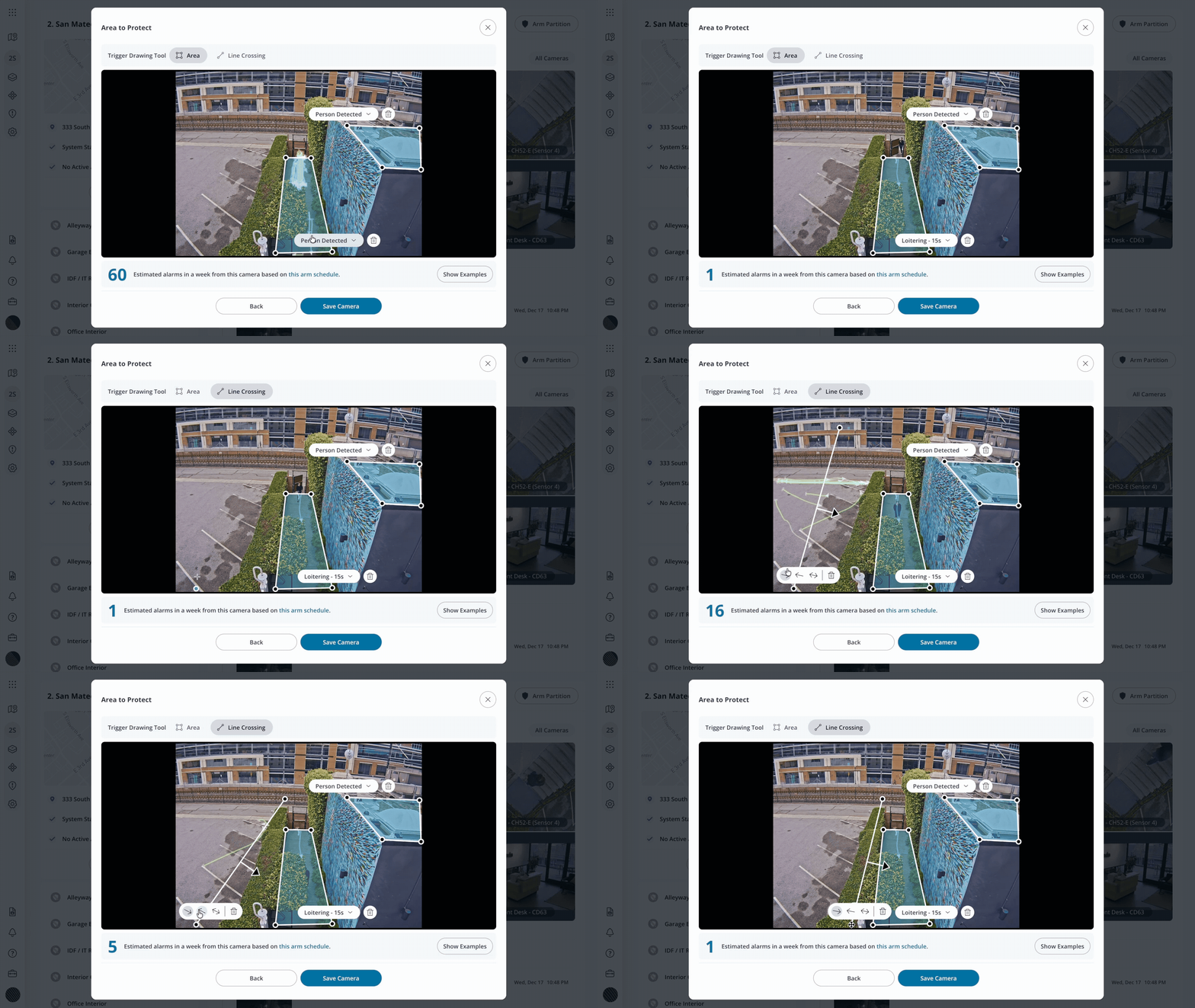
The success of the video security deployment led Wilson’s NAPA to evaluate Verkada Alarms. Gallagher had already been exploring alternatives to traditional alarm sensors and wanted a system that could detect more than door openings or basic motion. With Verkada, they could pair traditional sensors with camera-based triggers such as person detection, motion detection, and line crossing — extending protection beyond the four walls of the building.
The Solution: A Layered Approach to Store and Perimeter Protection
Wilson’s NAPA first tested Verkada Alarms at its warehouse, located near a busy truck stop by an interstate. The site had been experiencing break-ins to the facility as well as vehicles on the property.
The team ran Verkada alongside its legacy alarm system and quickly saw the difference.
“We noticed very quickly that Verkada was catching break-ins much earlier than the alarm system we had been using,” said Gallagher. “After seeing that at one location, we realized we needed to get this in every single one of our locations.”
By January 2022, Wilson’s NAPA had deployed Verkada Alarms across all locations.
Today, the company uses a layered security model that combines traditional alarm devices — including door sensors and glass break sensors — with camera-based triggers. Depending on the location and risk profile, Gallagher can configure different rules for different areas, such as person detection near vehicles, line crossing at restricted areas, or loitering outside a store after hours.
Because the system is managed through Verkada Command, Gallagher can see whether each site is armed or disarmed from the web or mobile app. If an alarm is triggered, he can quickly pull up the associated video footage to understand what happened. Instead of jumping between an alarm event log and a separate DVR system, the context is available in one place.
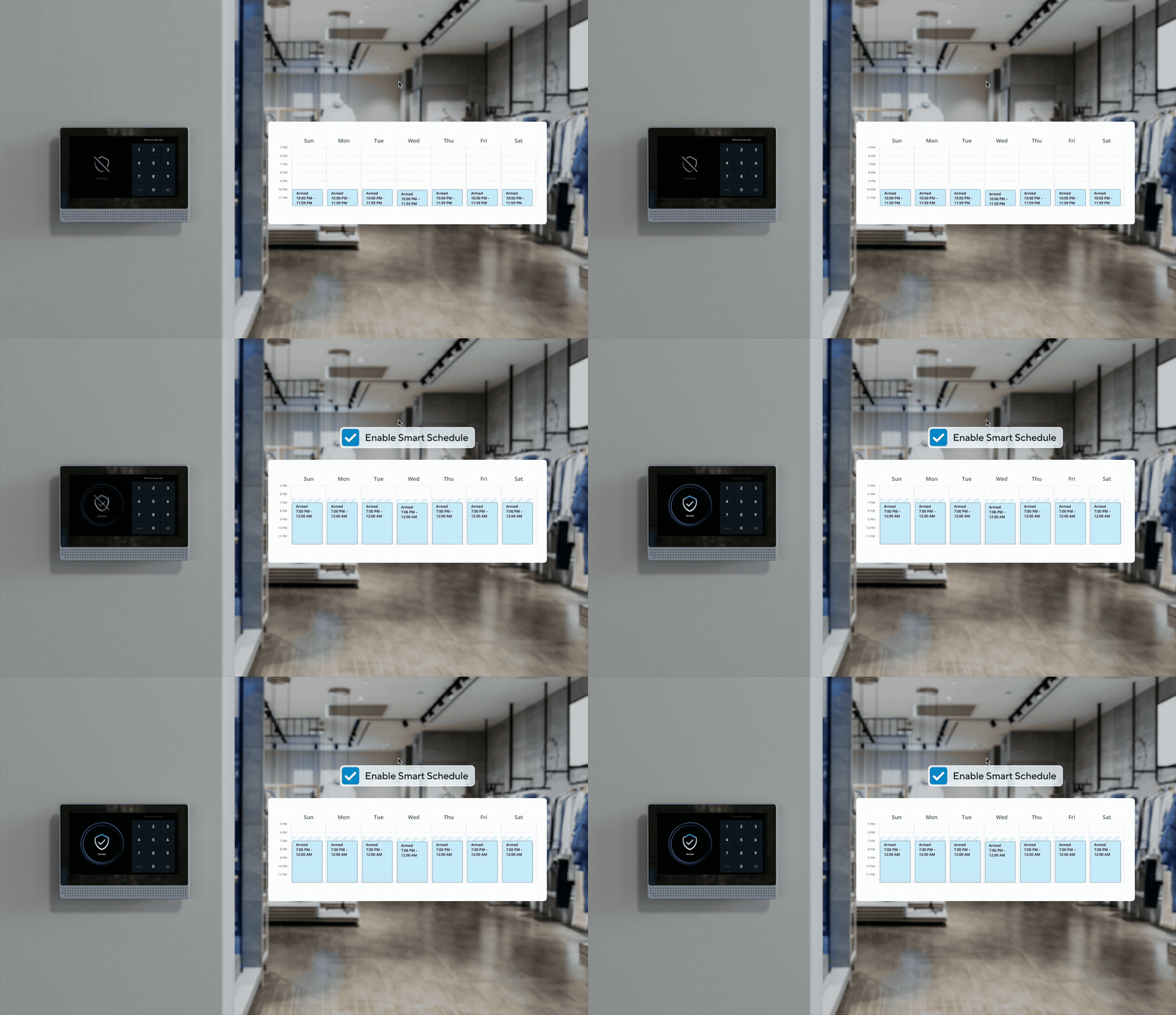
Wilson’s NAPA also uses arming schedules as a second layer of protection. If an employee forgets to manually arm a location at closing, the system can arm the site on a schedule after employees have left. For Gallagher, that provides added confidence that every site is protected overnight.
Faster Response with Live Video Context
One of the clearest examples of Verkada’s impact came when Wilson’s NAPA detected an attempted vehicle battery theft.
A company truck had been targeted multiple times over the years because its batteries were exposed. To better protect it, Gallagher configured person detection on a nearby camera. When someone approached the vehicle, hid behind the truck, and attempted to get underneath it to steal the batteries, Verkada detected the activity.
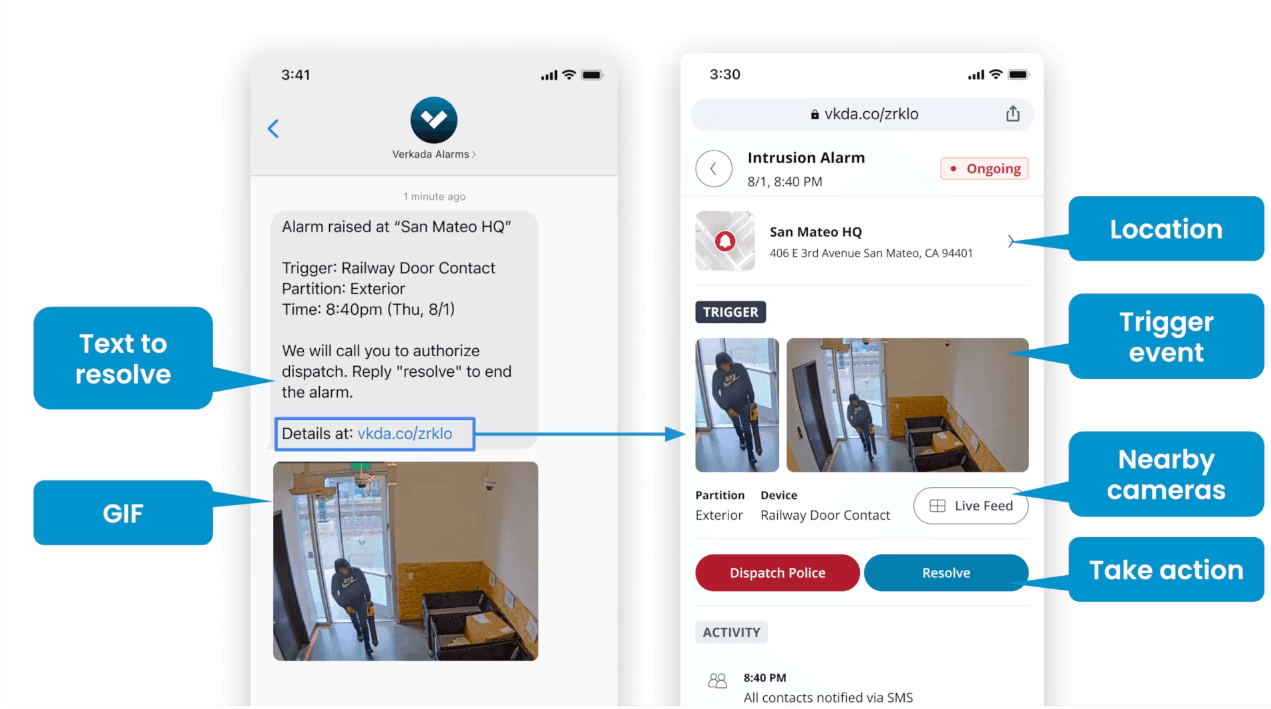
Gallagher received the alert and was able to share a live video link with police. With real-time visibility into what was happening, officers could respond more strategically, approach the scene without alerting the individual, and make contact before the person ran away, stole anything, or caused additional damage.
Verkada has also helped Wilson’s NAPA investigate theft across multiple locations. In one case, Gallagher reviewed footage after a break-in and noticed a distinctive detail: the individual’s bright red shoes. By looking back through footage from previous days, the team found video of the same person appearing to scope out merchandise. The investigation eventually connected the individual to multiple Wilson’s NAPA locations and helped uncover a retail theft ring.
Wilson’s NAPA has also used Verkada to investigate internal theft. In one case, cameras and alarms helped the team identify someone who had stolen a manager’s alarm code and was entering a store after hours to steal product.
In each case, the value was not just capturing footage after the fact. It was being able to connect activity across cameras, locations, and events — then share relevant context with law enforcement quickly.
The Results: More Than 20 Break-Ins Prevented in the First Year
Within the first year of deploying Verkada Alarms, Wilson’s NAPA prevented more than 20 break-ins and helped police arrest five individuals.
For Gallagher, those results reflect a larger shift in how Wilson’s NAPA approaches physical security. Instead of discovering broken glass, missing inventory, or vehicle damage after the fact, the team can detect suspicious activity earlier, verify what is happening remotely, and coordinate a faster response.
The platform has also helped Wilson’s NAPA reduce false alarms and streamline alarm response. With the previous alarm system, an alarm event often required someone to visit the store to determine what happened. With Verkada, trained agents can review video footage, verify whether a person is present, and provide additional context before the team takes action.
“With a Verkada agent verifying whether it’s a false alarm or an active threat, we have the information we need to decide the right next step,” said Gallagher.
A Partnership That Continues to Evolve
Since first partnering with Verkada in 2021, Wilson’s NAPA has continued to expand its use of the platform. The company now uses Verkada across all of its locations and plans to deploy Verkada quickly whenever it acquires or opens a new site.
Gallagher also highlighted Verkada’s responsiveness to customer feedback. As Wilson’s NAPA has continued to use the platform, the team has shared ideas and suggestions through its account manager — and has seen that feedback passed along to the right product teams.
For Wilson’s NAPA, Verkada has helped turn security from a reactive process into a proactive strategy. Instead of waiting until an incident is over, Gallagher and his team can detect threats earlier, understand what is happening in real time, and help stop damage or theft before it occurs.
“Verkada has changed our approach from reactive to proactive,” said Gallagher. “Instead of waiting until someone breaks through the door, we can catch suspicious activity earlier, get police involved faster, and often help stop the incident before there’s damage or theft.”